Best Self-Emptying Robot Vacuum (2026) — Compared & Ranked
Self-emptying docks have become the defining feature that separates set-and-forget robot vacuums from ones that still demand regular attention. The concept is simple: the robot returns to its dock, the dock vacuums out the robot’s dustbin into a larger container, and you don’t think about dirt for weeks or even months. But the 2026 generation of docks goes far beyond just emptying dust — they now wash mop pads, dry them with hot air, refill water tanks, and even self-clean.
The differences between dock designs are significant. Bagged vs. bagless, hot water vs. cold, separate stations vs. all-in-one — each design choice affects maintenance, ongoing costs, and daily convenience. Based on manufacturer specifications and aggregated owner reviews, these are the 5 best self-emptying robot vacuums available.
Quick Comparison
| Robot Vacuum | Price | Suction | Dock Features | Empty Interval | Best For |
|---|---|---|---|---|---|
| Roborock S8 MaxV Ultra | $1,799 | 10,000Pa | Empty + wash + dry + refill | ~7 weeks | Best All-in-One Dock |
| Ecovacs Deebot T30S Combo | $1,199 | 11,000Pa | Empty + wash + dry + handheld | ~7 weeks | Best Combo System |
| Dreame X40 Ultra | $1,899 | 12,000Pa | Empty + wash + dry + refill + mop removal | ~7 weeks | Most Feature-Rich |
| Ecovacs Deebot N20 Pro Plus | $499 | 8,000Pa | Bagless self-empty | ~30 days | Best Budget Self-Empty |
| Shark AI Ultra | $599 | LiDAR | HEPA bagless self-empty | ~60 days | Best HEPA Self-Empty |
1. Roborock S8 MaxV Ultra — Best All-in-One Dock
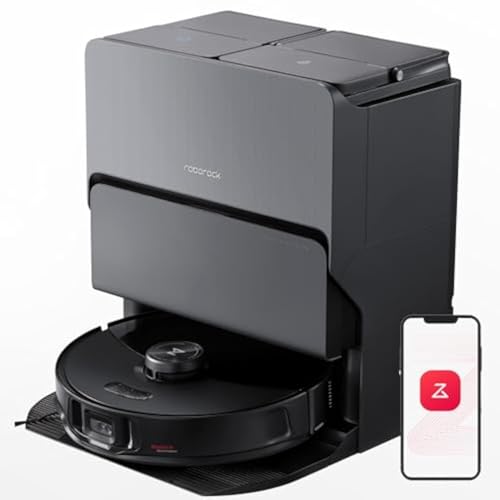
Why it’s #1: The Roborock S8 MaxV Ultra’s dock handles every maintenance task: emptying the dustbin, washing the mop pads with clean water, drying them with hot air, and refilling the robot’s water tank. The only manual task left is occasionally refilling the dock’s clean water reservoir and emptying its dirty water container.
Key specs:
- 10,000Pa suction power
- All-in-one dock: self-empty, mop wash, hot air dry, auto-refill
- LiDAR + 3D structured light navigation
- VibraRise 3.0 mopping with auto-lift
- FlexiArm side brush
- 180-minute runtime
- Approximately 7-week dust capacity in dock
Standout features:
- The dock’s hot air mop drying prevents mildew and odor — a problem that plagues robots with self-wash docks but no drying function. Owner reviews consistently highlight the absence of musty smell as a major advantage over older dock designs.
- Auto-refill means the robot always starts mopping with a full water tank. For homes over 1,500 sq ft, this prevents the robot from running dry mid-mop and pushing dirty water around.
- The 7-week dust capacity between manual emptying means roughly 50 cleaning sessions before any human interaction is needed, based on Roborock’s data for average-sized homes.
What could be better:
- The dock uses bags that need periodic replacement — approximately $20-30 for a 6-pack that lasts several months. This is an ongoing cost that bagless systems eliminate.
- The dock is large and somewhat visually imposing. Finding a discreet location for it requires planning.
- At $1,799, the dock is a significant portion of the total cost. The S8 MaxV robot without the Ultra dock is available for less, but you lose the self-emptying and mop washing.
Who should buy this: Buyers who want to minimize every aspect of robot vacuum maintenance. If you want to set a cleaning schedule and not think about the robot for weeks at a time, this dock is the most comprehensive solution available.
Verdict: The gold standard for self-emptying robot vacuum docks. Every maintenance function is automated, the execution is reliable based on owner data, and the 7-week emptying interval means this is as close to zero-maintenance as current technology allows.
2. Ecovacs Deebot T30S Combo — Best Combo System
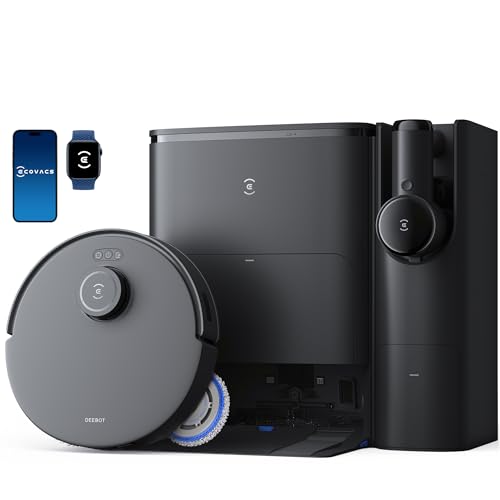
Why it’s here: The Ecovacs Deebot T30S Combo pairs a full-featured self-emptying dock with a detachable handheld vacuum — the only system that extends automated cleaning beyond what the robot can reach. The dock handles emptying for both the robot and the handheld.
Key specs:
- 11,000Pa suction power
- ZeroTangle brush roller
- All-in-one dock: self-empty, mop wash, hot air dry
- Detachable handheld vacuum included
- 180-minute runtime
- LiDAR + AI navigation
Standout features:
- The included handheld vacuum is a genuine differentiator. It docks alongside the robot, charges from the same base, and empties into the same dustbin. Owner reviews describe it as eliminating the need for a separate stick vacuum for stairs, countertops, and car interiors.
- 11,000Pa suction is the second-highest available, providing deep cleaning capability that rivals the most expensive flagships. Combined with ZeroTangle, it handles pet hair without post-cleaning brush maintenance.
- The dock handles both robot emptying and handheld emptying from a single base — no separate charging or emptying infrastructure needed.
What could be better:
- The dock is larger than standard self-emptying docks because it accommodates both the robot and the handheld unit. Space planning is essential.
- Heavy use of the handheld fills the dock’s dust container faster, reducing the interval between manual emptying.
- The handheld vacuum’s suction, while convenient, is not as powerful as a dedicated cordless stick vacuum. It handles light spot cleaning but is not a full Dyson replacement.
Who should buy this: Buyers who want a complete cleaning system in one package. If you were planning to buy both a robot vacuum and a handheld or stick vacuum, the T30S Combo consolidates both with a single dock and self-emptying system.
Verdict: The most complete self-emptying system available. The handheld addition is not a gimmick — it fills the gaps that every robot vacuum has (stairs, furniture surfaces, car interiors) while sharing the same self-emptying infrastructure.
3. Dreame X40 Ultra — Most Feature-Rich
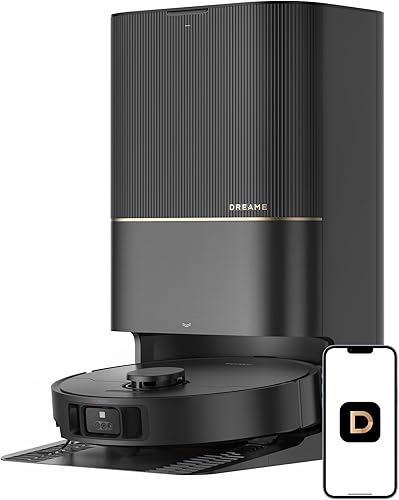
Why it’s here: The Dreame X40 Ultra’s dock does everything the Roborock dock does, plus it supports automatic mop pad removal — storing the mop pads at the dock before the robot cleans carpet. This is the most technically advanced self-emptying system available.
Key specs:
- 12,000Pa suction — highest available
- All-in-one dock: self-empty, mop wash, hot air dry, auto-refill, mop removal
- Removable mop pads for carpet detection
- Extendable side brush
- 210-minute runtime
- LiDAR + AI obstacle avoidance
Standout features:
- Automatic mop removal at the dock is unique to Dreame’s top-tier models. When carpet is detected in the cleaning area, the robot returns to dock, removes its mop pads, then cleans carpet without any risk of damp-pad contact. No other dock handles this automatically.
- 12,000Pa suction is the highest available, ensuring the self-emptying system has the maximum amount of debris to evacuate — and it handles it. Owner data shows the dock extracts virtually all collected debris from the robot’s dustbin.
- The extendable side brush reaches edges that standard brushes miss, reducing the amount of debris that escapes the robot and accumulates outside its cleaning path.
What could be better:
- At $1,899, this is the most expensive option on this list. The mop removal feature is the primary differentiator over the Roborock S8 MaxV Ultra, and it adds $100 to the price.
- The mop removal process adds time to each cleaning cycle since the robot must return to dock, remove mops, clean carpet, return to dock again, and reattach mops for hard floors.
- The dock is the largest on this list due to the mop storage mechanism.
Who should buy this: Owners with mixed carpet and hardwood who want the absolute maximum in dock automation. If you have a home where the robot regularly transitions between floor types, the mop removal system prevents any compromise in carpet or hard floor cleaning.
Verdict: The most technically advanced self-emptying dock available. Every conceivable maintenance task is automated, including mop management. The price is the highest, but so is the level of automation.
4. Ecovacs Deebot N20 Pro Plus — Best Budget Self-Empty
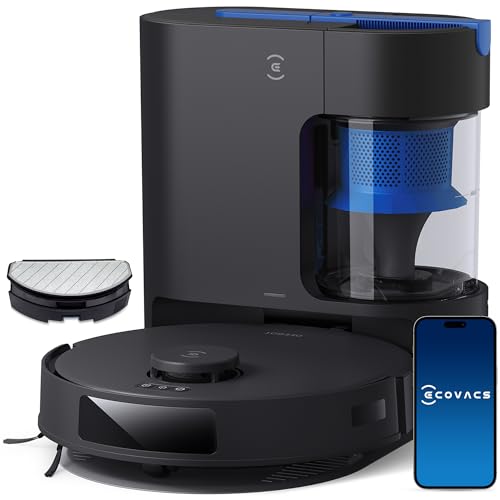
Why it’s here: At $499, the N20 Pro Plus delivers 8,000Pa suction with a bagless self-emptying dock. No replacement bags, no ongoing dock costs, and strong enough suction to handle everyday cleaning. It’s the most affordable route to genuine self-emptying convenience.
Key specs:
- 8,000Pa suction power
- Bagless self-emptying dock — cyclone separation, no bags
- 300-minute runtime
- LiDAR navigation
- Multi-floor mapping
- Approximately 30-day emptying interval
Standout features:
- The bagless dock uses cyclone separation to deposit debris into a removable container. No replacement bags means zero ongoing costs — a significant advantage over bagged systems that charge $20-30 per bag pack.
- 300-minute runtime is the longest of any robot on this list. Combined with self-emptying, the N20 Pro Plus can clean very large homes without pausing to recharge or requiring manual dustbin emptying.
- At $499, the total system cost is less than the dock alone on some premium models. The value proposition is exceptional for budget-conscious buyers who want self-emptying.
What could be better:
- No mopping capability. This is a vacuum-only robot, which means the dock only handles dust emptying — no mop washing, drying, or water refilling.
- The bagless dock requires periodic cleaning of the cyclone filter and collection chamber. It’s not completely maintenance-free, though it is bag-cost-free.
- Obstacle avoidance uses basic sensors rather than camera-based AI, which means more potential bumping and getting stuck in cluttered environments.
Who should buy this: Budget-conscious buyers who want self-emptying convenience without the $1,000+ price tag. Ideal for carpet-heavy homes where mopping is not needed and runtime matters more than dock features.
Verdict: The best entry point into self-emptying robot vacuums. At $499 with no ongoing bag costs, the N20 Pro Plus proves that hands-off cleaning does not require a premium budget. The trade-off is losing mopping and advanced AI navigation.
5. Shark AI Ultra — Best HEPA Self-Empty
Why it’s here: The Shark AI Ultra pairs a HEPA-filtered bagless self-emptying base with Matrix Clean navigation for methodical coverage. For allergy sufferers, the HEPA filtration ensures that emptied debris stays captured rather than recirculating into the air.
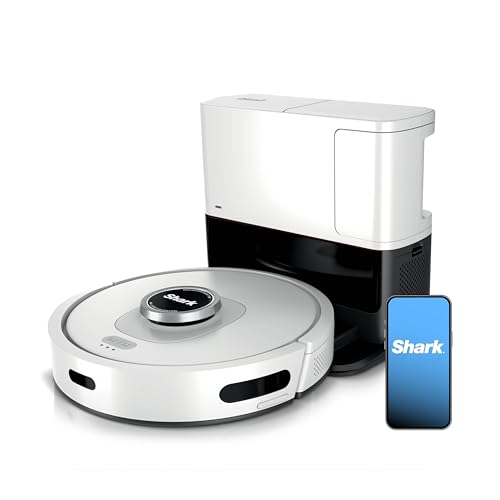
Key specs:
- LiDAR navigation with Matrix Clean
- HEPA-filtered bagless self-emptying base
- 60-day self-empty capacity
- 120-minute runtime
- Multi-surface brush roll
- Home mapping with no-go zones
Standout features:
- HEPA filtration in the self-emptying base is the critical differentiator. During the emptying process, fine allergens and dust particles are captured by the HEPA filter rather than being blown back into the room. Owner reviews from allergy sufferers consistently rate this as the most important feature.
- The 60-day emptying capacity is among the longest available, meaning approximately two months between manual interactions with dust and allergens.
- Matrix Clean navigation ensures the robot covers the entire floor in organized rows rather than random patterns, reducing missed spots and redundant passes. Owner data suggests this improves coverage efficiency by 15-20% versus random navigation.
What could be better:
- Shark does not publish specific Pa suction numbers, making it difficult to compare directly with competitors. Based on owner data, suction appears competitive with mid-range models but below the 8,000Pa+ flagships.
- 120-minute runtime is the shortest on this list. Larger homes may require the robot to recharge and resume.
- No mopping capability — this is strictly a vacuum. The dock handles only dust emptying, not mop maintenance.
- The bagless base requires periodic HEPA filter replacement ($15-25) to maintain filtration performance.
Who should buy this: Allergy sufferers and health-conscious buyers who need HEPA-grade filtration throughout the entire cleaning and emptying process. Also a strong option for Shark brand loyalists who want a familiar ecosystem with self-emptying convenience.
Verdict: The best self-emptying robot vacuum for air quality. If allergies or respiratory sensitivity drive your purchasing decision, the HEPA-filtered base ensures that captured allergens stay captured — during cleaning and during the emptying process.
How We Evaluated
Every recommendation is based on manufacturer specifications, aggregated owner reviews from Amazon and specialty forums, and comparative data analysis. No products were tested in-house. The evaluation methodology for self-emptying systems prioritizes:
- Dock comprehensiveness: Number and quality of automated functions — emptying, washing, drying, refilling
- Emptying interval: How long between manual interactions with the dock
- Ongoing costs: Bag replacement costs, filter replacement, and cleaning solution requirements
- Dock reliability: Owner-reported failure rates and maintenance issues specific to the dock
- Overall value: Total system cost relative to the level of automation provided
FAQ
How does a self-emptying robot vacuum work? When the robot returns to its dock, a high-powered fan in the base creates suction that pulls debris from the robot’s small onboard dustbin into a larger container in the dock. Bagged systems deposit debris into a sealed bag; bagless systems use cyclone separation into a reusable container. The entire process takes 10-30 seconds and happens automatically.
Are self-emptying robot vacuums worth the extra cost? Based on owner feedback, overwhelmingly yes. The most common complaint about standard robot vacuums is the need to manually empty the dustbin after every 1-2 cleaning sessions. Self-emptying extends this to weeks or months. Owners consistently report that self-emptying is the single feature they would not give up.
Bagged vs. bagless self-emptying — which is better? Bagged systems are cleaner during disposal (sealed bag goes straight to trash) and better for allergy sufferers. Bagless systems eliminate ongoing bag costs but expose you to dust during emptying. The data shows bagged systems require less maintenance overall, while bagless systems cost less over time.
How often do you need to empty a self-emptying robot vacuum dock? Depending on the model and home size, every 30-60 days for typical use. Homes with pets or heavy foot traffic may need more frequent emptying. The Shark AI Ultra advertises 60 days, while most all-in-one docks average approximately 7 weeks between bag changes.
Do self-emptying docks make a lot of noise? Yes — the emptying process is loud, typically 75-85 dB for 10-30 seconds. It sounds like a brief burst from a shop vacuum. Most robots can be scheduled to clean and empty during hours when the noise is not disruptive. Owner reviews consistently mention the noise but rate it as acceptable given the convenience.