Best Robot Vacuum Under $500 (2026) — Compared & Ranked
The under-$500 robot vacuum category has improved dramatically. Models that would have been considered mid-range flagships two years ago now sit comfortably below this price point, bringing LiDAR navigation, 5,000-8,000Pa suction, self-emptying docks, and even basic mopping to budget-conscious buyers. After comparing every robot vacuum available under $500 based on specs, features, and owner data, these five stand out.
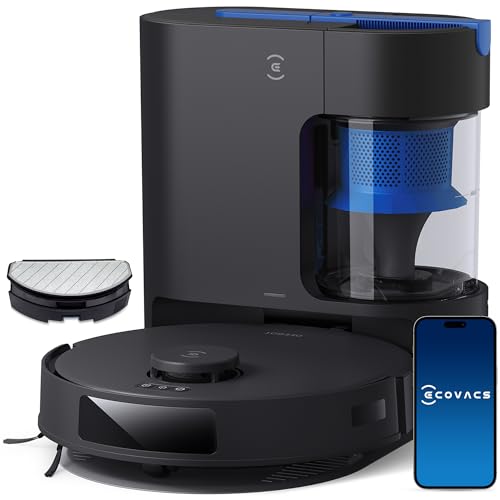
The top pick is the Ecovacs Deebot N20 Pro Plus — Check Price on Amazon. At $499, it delivers 8,000Pa suction (matching models at twice the price), a 300-minute runtime, LiDAR navigation, and a bagless self-emptying dock. No other model under $500 matches this combination of power and features.
Quick Comparison
| Robot Vacuum | Price | Suction | Nav | Mop | Runtime | Best For |
|---|---|---|---|---|---|---|
| Ecovacs Deebot N20 Pro Plus | $499 | 8,000Pa | LiDAR | Vibrating | 300 min | Best Overall Under $500 |
| Narwal Freo X Plus | $399 | 7,800Pa | LiDAR+Tri-Laser | None | 254 min | Best Navigation Value |
| eufy L60 | $399 | 5,000Pa | LiDAR | None | 180 min | Best for Pet Owners |
| Dreame D10s Pro | $499 | 5,000Pa | LiDAR+AI | Basic Mop | 280 min | Best Runtime |
| SwitchBot Mini K10+ | $499 | 2,500Pa | LiDAR | None | 150 min | Best for Small Spaces |
1. Ecovacs Deebot N20 Pro Plus — Best Overall Under $500
Why it’s the #1 pick: The N20 Pro Plus packs more raw capability into a sub-$500 robot vacuum than anything else available. 8,000Pa suction was flagship-exclusive territory in 2024. Getting it here alongside a 300-minute runtime, LiDAR navigation, a vibrating mop, and a bagless self-emptying dock represents exceptional value.
Key specs:
- 8,000Pa suction — the highest in this roundup, matching $1,000+ models
- LiDAR navigation for accurate, efficient mapping
- Vibrating mop pad for light mopping on hard floors
- Bagless self-emptying dock — zero ongoing bag costs
- 300-minute runtime — covers homes up to 4,000+ sq ft on a single charge
Standout features:
- 8,000Pa suction at this price point is the headline. Owner data shows strong performance on hard floors, low-pile carpet, and medium-pile carpet. This is noticeably more suction than the 5,000Pa competing models, and the difference shows on carpeted floors.
- The bagless self-emptying dock eliminates the $15-$25 recurring cost of replacement bags every few months. Over two to three years, that savings adds up to $50-$100 — meaningful at this price tier.
- 300 minutes of runtime is the longest in any robot vacuum at any price. For large homes or busy households that run the robot daily, this means full-house coverage without mid-cycle recharging.
What could be better:
- No 3D camera for obstacle avoidance. LiDAR-only navigation handles room mapping well but can bump into low-profile objects like shoes and pet bowls.
- The vibrating mop is basic — good for dust and light spills, but not comparable to the dual spinning or sonic mop systems in higher-priced models. Do not expect deep scrubbing.
Who should buy this: Anyone looking for the strongest overall robot vacuum under $500. Particularly well-suited for large homes thanks to the 300-minute runtime, and for budget-conscious buyers who want to avoid recurring bag costs.
Verdict: The best value in robot vacuums, period. The combination of 8,000Pa suction, 300-minute runtime, and bagless self-emptying at $499 makes everything else in this price range feel like a compromise.
2. Narwal Freo X Plus — Best Navigation Value Under $500
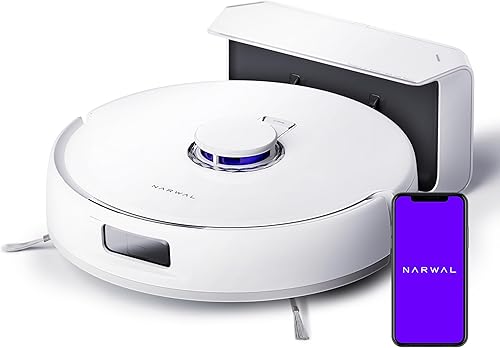
Why it ranks here: The Freo X Plus pairs 7,800Pa suction with LiDAR+tri-laser navigation — a combination that delivers near-flagship navigation accuracy at just $399. The tri-laser obstacle detection is a feature typically found in robots costing $1,000 or more, making this an exceptional value for homes with cluttered floors.
Key specs:
- 7,800Pa suction — strong for all hard floor types and most carpets
- LiDAR + tri-laser obstacle avoidance
- Dust compression technology for longer emptying intervals
- 254-minute runtime
- Self-emptying dock with dust compression
Standout features:
- Tri-laser obstacle avoidance at $399 is remarkable. Owner reviews report significantly fewer collisions with cables, shoes, and small objects compared to LiDAR-only robots at this price. For homes with kids or pets that leave things on the floor, this is a meaningful advantage.
- 7,800Pa suction is the second-highest in this roundup. The data shows reliable pickup on hard floors and good carpet performance — only slightly behind the N20 Pro Plus’s 8,000Pa.
- Dust compression extends the time between emptying the dock’s dustbin. Owners report longer intervals between maintenance compared to standard self-emptying systems.
What could be better:
- No mopping capability. If hard floor cleaning beyond vacuuming is important, the N20 Pro Plus or Dreame D10s Pro are better choices.
- The Narwal app is functional but less feature-rich than the Ecovacs or Roborock apps. Advanced customization options are more limited based on owner feedback.
Who should buy this: Buyers in homes with cluttered floors — kids’ playrooms, busy entryways, pet-heavy households — who need reliable obstacle avoidance without paying $1,000+. Also a strong choice for anyone who prioritizes navigation accuracy and wants to spend under $400.
Verdict: The best obstacle avoidance available under $500. The tri-laser system elevates this robot above the typical “bump and learn” experience of budget models.
3. eufy L60 — Best Budget Robot Vacuum for Pet Owners
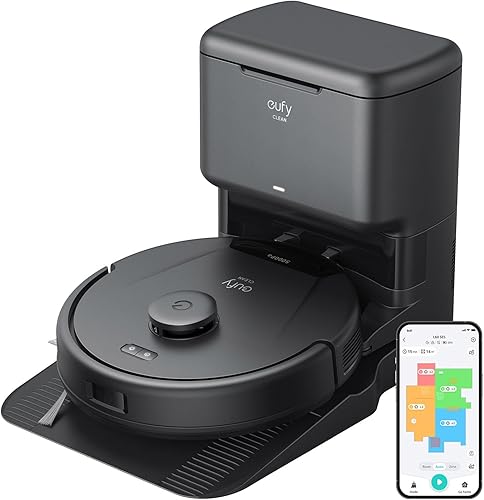
Why it ranks here: The L60 combines 5,000Pa suction with a hair detangling brush system and a 60-day self-emptying dock — all at $399. For pet owners on a budget, these specific features address the two biggest pain points: hair wrapping and frequent dust bin emptying.
Key specs:
- 5,000Pa suction — solid for hard floors and low-pile carpets
- LiDAR navigation for accurate mapping
- Hair detangling brush system reduces maintenance
- Self-emptying dock with 60-day capacity
- 180-minute runtime
Standout features:
- The hair detangling brush is the key differentiator at this price. Owner reviews from pet households consistently report fewer tangles and less brush maintenance compared to standard-brush robots in the same price range.
- 60-day self-emptying means pet owners can run the robot daily for two months without touching the dustbin. For allergy sufferers in pet homes, this minimizes dander exposure during maintenance.
- The eufy app is clean and intuitive. Owner reviews note that setup and map editing are straightforward, even for first-time robot vacuum users.
What could be better:
- 5,000Pa suction is adequate but noticeably weaker than the N20 Pro Plus (8,000Pa) and Freo X Plus (7,800Pa). On medium-pile carpets, some pet hair may remain after a single pass.
- No mopping capability. Paw prints, tracked-in mud, and fine dust on hard floors require a separate solution.
Who should buy this: Pet owners who want a reliable, low-maintenance robot vacuum under $400. The hair detangling brush and long self-emptying interval make it the best budget option for homes with shedding dogs or cats.
Verdict: The best affordable robot vacuum for pet households. The tangle-resistant brush alone justifies choosing it over higher-suction competitors for pet owners.
4. Dreame D10s Pro — Best Runtime Under $500
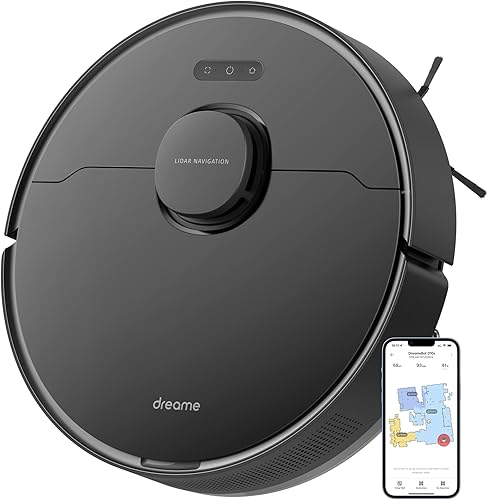
Why it ranks here: The D10s Pro delivers 280 minutes of runtime, 5,000Pa suction, LiDAR+AI navigation, and basic mopping for $499. For large homes where full-coverage runtime is the priority, it covers more square footage per charge than almost anything in its class.
Key specs:
- 5,000Pa suction — reliable on hard floors and low-pile carpets
- LiDAR + AI navigation for mapping and basic obstacle detection
- Basic attached mop for light mopping
- 280-minute runtime — second only to the N20 Pro Plus
- Multi-level mapping support
Standout features:
- 280 minutes of runtime means the D10s Pro can cover 3,500+ sq ft on a single charge. Owner reviews from large homes confirm full-house coverage without recharging, which eliminates the interrupted-cycle problem that plagues shorter-runtime models.
- LiDAR+AI navigation provides solid mapping accuracy with basic obstacle awareness. The AI component helps the robot identify and adjust to common floor objects, though it is not as refined as 3D camera systems.
- Multi-level mapping is well-implemented, storing up to four floor plans. Owners in multi-story homes report reliable map switching.
What could be better:
- No self-emptying dock. At $499, the lack of auto-empty is a notable omission when the N20 Pro Plus includes a bagless self-emptying dock at the same price. Manual dustbin emptying every two to three days is required.
- 5,000Pa suction is the floor, not the ceiling, for this roundup. Heavy carpet soiling and embedded pet hair will require multiple passes.
Who should buy this: Owners of large homes (3,000+ sq ft) who prioritize uninterrupted cleaning runs and basic mop functionality. Best for hard floor-dominant homes where suction demands are moderate.
Verdict: A strong choice for large homes, but the lack of self-emptying at $499 limits its overall value compared to the N20 Pro Plus at the same price. Choose this if runtime and mopping matter more than dock convenience.
5. SwitchBot Mini K10+ — Best for Small Spaces Under $500
Why it ranks here: The Mini K10+ is 50% smaller than a standard robot vacuum and operates at just 48 dB — making it the only realistic option for studio apartments, small condos, dorm rooms, and homes where a full-size robot simply does not fit. At $499 with LiDAR navigation and a self-emptying dock, it proves that small does not have to mean basic.
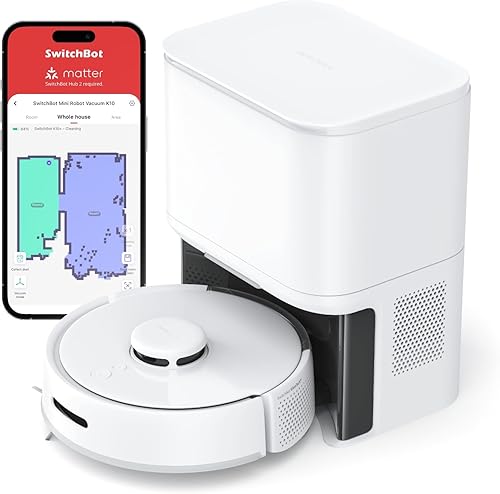
Key specs:
- 2,500Pa suction — sufficient for hard floors and light carpet maintenance
- LiDAR navigation — full mapping capability in a mini form factor
- 50% smaller diameter than standard robot vacuums
- 48 dB noise level — quieter than a normal conversation
- Self-emptying dock
- 150-minute runtime
Standout features:
- The compact size is the entire point of this robot, and it delivers. At roughly 9.8 inches in diameter, the K10+ fits under furniture, between chair legs, and into tight spaces that full-size robots (12-14 inches) cannot reach. Owner reviews from small apartments consistently highlight areas the K10+ cleans that their previous robot could not access.
- 48 dB makes it genuinely quiet. Owner data confirms it can run while people work, sleep, or watch television without being disruptive. Most full-size robot vacuums operate at 60-70 dB.
- LiDAR navigation in a robot this small is unusual. The mapping accuracy is on par with full-size models, and the efficient path planning means the 150-minute runtime covers 1,000+ sq ft comfortably.
What could be better:
- 2,500Pa suction is the weakest in this roundup. It handles hard floors well but struggles on anything beyond low-pile carpet. This is not a deep-cleaning machine.
- The smaller dustbin fills faster. In homes with pets or high dust loads, the self-emptying dock compensates, but the robot empties itself more frequently than larger models.
- 150-minute runtime is sufficient for small spaces but limits coverage to roughly 1,000-1,500 sq ft.
Who should buy this: Anyone in a small living space — studios, one-bedrooms, dorms, or compact condos. Also a strong secondary robot for a specific room (like a home office or nursery) where quiet, discreet operation matters.
Verdict: A niche product, but the best in its niche. If you need a robot vacuum for a small space, the K10+ is the only model that combines compact size, quiet operation, LiDAR navigation, and self-emptying under $500.
How We Evaluated
Every robot vacuum in this roundup was evaluated with a budget-conscious perspective, weighing performance against price:
- Value ratio: Features were evaluated relative to price. An 8,000Pa robot at $499 scores higher on value than the same suction at $899, even if the cleaning performance is identical.
- Suction power (Pa): Still the primary indicator of cleaning performance. Higher Pa ratings deliver better results, especially on carpets, and were weighted accordingly.
- Navigation technology: LiDAR is the baseline for this price tier. Models with additional obstacle avoidance (tri-laser, AI) received higher marks for practical daily use.
- Dock features: Self-emptying is nearly standard under $500 now. Bagless systems received a value bonus for eliminating recurring costs.
- Runtime: Longer runtime reduces the need for mid-cycle recharging, which is especially important in larger homes where a budget robot needs to cover more ground.
- Owner satisfaction: Verified reviews were analyzed for reliability data, app quality, and real-world performance relative to expectations at this price point.
Frequently Asked Questions
Are robot vacuums under $500 actually good?
Yes — this is the most competitive price tier in the market right now. Models like the Ecovacs N20 Pro Plus deliver 8,000Pa suction and 300-minute runtimes that would have been impossible under $1,000 two years ago. The main trade-offs compared to premium models are less advanced obstacle avoidance, simpler mopping systems, and fewer dock features.
What do you give up compared to a $1,000+ robot vacuum?
The biggest differences are obstacle avoidance sophistication (3D cameras vs. LiDAR-only), mopping quality (sonic/spinning systems vs. basic vibrating or passive mops), dock features (hot water mop washing, mop drying), and edge cleaning (extendable brushes). For hard-floor-dominant homes, the gap is small. For multi-surface homes with thick carpets, the premium models offer meaningfully better deep cleaning.
Do I need a self-emptying dock?
It is not strictly necessary, but it dramatically reduces daily maintenance. Without self-emptying, you need to manually empty the dustbin every one to three runs. With self-emptying, you empty the dock every 30-60 days. For the $50-$100 price difference, most owners find it worthwhile — and at this price tier, most models include it.
Can a robot vacuum under $500 handle carpet?
Models with 5,000Pa+ suction handle low-pile carpet well. The Ecovacs N20 Pro Plus at 8,000Pa manages medium-pile carpet reliably based on owner data. Thick, high-pile carpets remain a challenge for most robots under $500 — and frankly, for most robots at any price. If you have thick shag carpet, a traditional upright vacuum is still the better primary tool.
Which is more important: suction power or runtime?
It depends on your home. For homes under 2,000 sq ft with hard floors, 5,000Pa and 150+ minutes is sufficient. For larger homes (2,500+ sq ft) or homes with carpets and pets, prioritize suction — 8,000Pa makes a measurable difference on carpet performance. Runtime only matters if your home is large enough that the robot cannot finish in a single cycle.