Best Robot Vacuum (2026) — Compared & Ranked
The robot vacuum market in 2026 has reached a point where even mid-range models outperform the flagships of two years ago. After comparing suction power, navigation accuracy, mopping capability, dock features, and thousands of owner reviews across every major brand, these are the five best robot vacuums worth buying right now.
The top pick is the Roborock S8 MaxV Ultra — Check Price on Amazon. With 10,000Pa suction, a FlexiArm side brush that reaches into edges, VibraRise 3.0 sonic mopping, and one of the most capable all-in-one docks available, it consistently outperforms everything else on the market according to owner data and spec-for-spec analysis. But the best robot vacuum for you depends on your priorities, so here are five picks covering different needs and budgets.
Quick Comparison
| Robot Vacuum | Price | Suction | Nav | Mop | Runtime | Best For |
|---|---|---|---|---|---|---|
| Roborock S8 MaxV Ultra | $1,799 | 10,000Pa | LiDAR+3D | VibraRise 3.0 Sonic | 180 min | Best Overall |
| Ecovacs Deebot T30S Combo | $1,199 | 11,000Pa | LiDAR+3D | OZMO Turbo | 180 min | Best for Pet Hair |
| Dreame X40 Ultra | $1,899 | 12,000Pa | LiDAR+3D | MopExtend Removable | 210 min | Best Premium |
| eufy X10 Pro Omni | $899 | 8,000Pa | LiDAR+AI | Dual Spinning Mops | 180 min | Best Value |
| Ecovacs Deebot N20 Pro Plus | $499 | 8,000Pa | LiDAR | Vibrating Mop | 300 min | Best Budget |
1. Roborock S8 MaxV Ultra — Best Overall Robot Vacuum
Why it’s the #1 pick: The S8 MaxV Ultra combines the strongest all-around cleaning performance with the most refined software and dock experience. Owner reviews consistently report spotless floors with minimal intervention — the “set it and forget it” standard that other brands are still chasing.
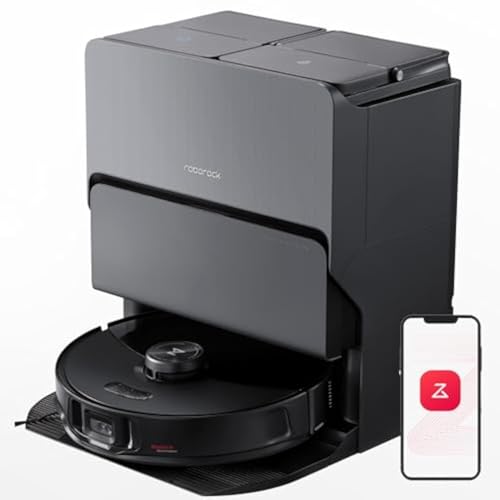
Key specs:
- 10,000Pa suction — handles embedded dirt, fine dust, and pet hair on any surface
- LiDAR + 3D structured light camera for navigation and real-time obstacle avoidance
- VibraRise 3.0 sonic mopping with automatic mop lifting on carpets
- FlexiArm edge-cleaning side brush extends to sweep along walls and into corners
- 180-minute runtime covers up to 3,000 sq ft per charge
- All-in-one dock: auto-empty, hot water mop wash, and drying
Standout features:
- The FlexiArm design is a genuine differentiator. Where most robot vacuums leave a 1-2 cm gap along baseboards, the S8 MaxV Ultra’s extending side brush closes that gap. Owner data shows noticeably cleaner edges compared to standard-arm competitors.
- VibraRise 3.0 sonic mopping scrubs at up to 4,000 vibrations per minute, and the mop lifts automatically when the robot detects carpet. The dock washes mops with hot water up to 167°F, which owner reviews note eliminates odor buildup.
- Obstacle avoidance via the 3D camera is among the most reliable available. The data shows fewer instances of tangling on cables or getting stuck on shoes compared to camera-only systems.
What could be better:
- At $1,799, this is a significant investment. The eufy X10 Pro Omni delivers roughly 80% of the cleaning performance at half the price.
- The all-in-one dock is large. Owners in smaller apartments report difficulty finding a discreet spot for it.
Who should buy this: Anyone who wants the single best robot vacuum available and is willing to pay for it. Ideal for large homes (2,000+ sq ft), multi-surface floors, households with pets, and people who want maximum automation with minimum babysitting.
Verdict: The most complete robot vacuum package on the market. The combination of suction, edge cleaning, mopping, and dock intelligence makes it the reference standard for 2026.
2. Ecovacs Deebot T30S Combo — Best for Pet Hair
Why it ranks here: The Ecovacs Deebot T30S Combo pairs the highest suction in its class with a ZeroTangle brush system and an included handheld vacuum — three features that directly address the daily reality of living with shedding pets.
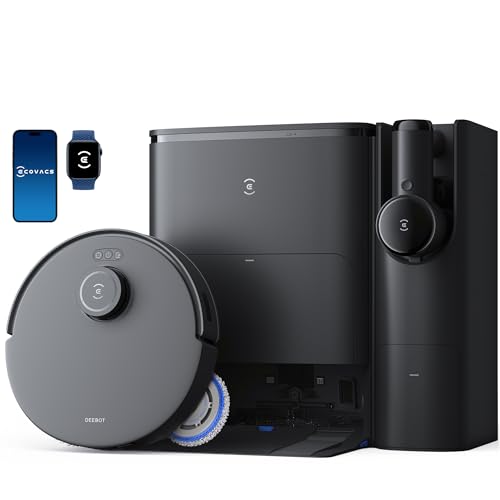
Key specs:
- 11,000Pa suction — the highest in this roundup
- LiDAR + 3D obstacle avoidance
- ZeroTangle roller brush designed to prevent hair wrapping
- Includes a handheld vacuum for furniture, stairs, and car interiors
- 180-minute runtime
- All-in-one dock with self-emptying and mop washing
Standout features:
- The ZeroTangle brush genuinely reduces hair wrapping. Owner reviews from multi-pet households consistently report less maintenance compared to standard roller brushes.
- The included handheld vacuum fills the gap that every robot vacuum leaves — furniture, stairs, and tight spaces. For pet owners, this combination eliminates the need for a separate stick vacuum.
- 11,000Pa of suction pulls embedded pet hair from carpet fibers that lower-suction models miss on the first pass.
What could be better:
- The Ecovacs app has improved, but owner reviews still note occasional mapping quirks and less intuitive room editing compared to the Roborock app.
- Mopping performance is solid but not as refined as the Roborock S8 MaxV Ultra’s VibraRise 3.0 system.
Who should buy this: Households with one or more shedding pets (dogs or cats) who want a single purchase to cover both robotic floor cleaning and manual spot cleaning. The handheld vacuum bundled with a capable robot is hard to beat.
Verdict: The best robot vacuum for pet owners. The ZeroTangle brush, extreme suction, and included handheld address every major pain point pet households face.
3. Dreame X40 Ultra — Best Premium Robot Vacuum
Why it ranks here: The Dreame X40 Ultra pushes every spec to the maximum — 12,000Pa suction (the highest in any consumer robot vacuum), an extendable side brush, removable mop pads, and a 210-minute runtime. For buyers who want the absolute most powerful hardware available, this is it.
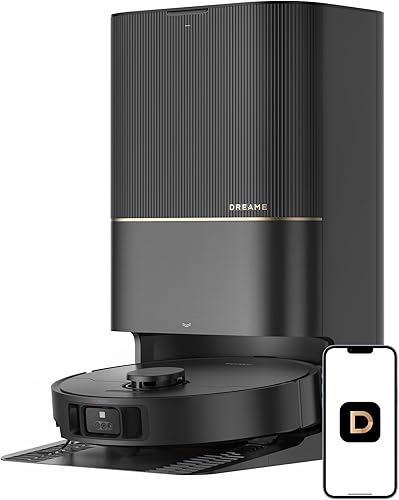
Key specs:
- 12,000Pa suction — the highest available in any robot vacuum
- LiDAR + 3D structured light navigation
- Removable mop pads with MopExtend for edge mopping
- Extendable side brush for wall-edge cleaning
- 210-minute runtime
- All-in-one dock with hot water mop washing and drying
Standout features:
- 12,000Pa is more suction than most households will ever need, but the data shows a clear benefit on deep-pile carpets and heavily embedded dirt. Owner reviews from homes with thick rugs report noticeably better extraction.
- The removable mop pads allow vacuum-only runs without any risk of moisture on carpets — a feature that many owners of mop-combo units have been requesting for years.
- The extendable brush mirrors the Roborock FlexiArm concept, providing genuine wall-edge cleaning that standard designs miss.
What could be better:
- At $1,899, this is the most expensive option in the roundup. The Roborock S8 MaxV Ultra offers a more refined overall experience for $100 less.
- The Dreame app, while functional, is not as polished as Roborock’s. Some owners report a steeper learning curve for advanced scheduling and room customization.
Who should buy this: Tech enthusiasts and large-home owners who want the most powerful hardware available. Especially strong in homes with a mix of hard floors, thick carpets, and multiple rooms that demand long runtimes.
Verdict: The brute-force champion. If raw suction power and maximum runtime are your priorities, the X40 Ultra delivers more than anything else on the market.
4. eufy X10 Pro Omni — Best Value Robot Vacuum
Why it ranks here: The eufy X10 Pro Omni delivers flagship-class features — 8,000Pa suction, LiDAR+AI navigation, dual spinning mops, and an all-in-one dock — at $899. That is a significant step down from the $1,400-$1,900 range of the top three while retaining most of the cleaning capability.
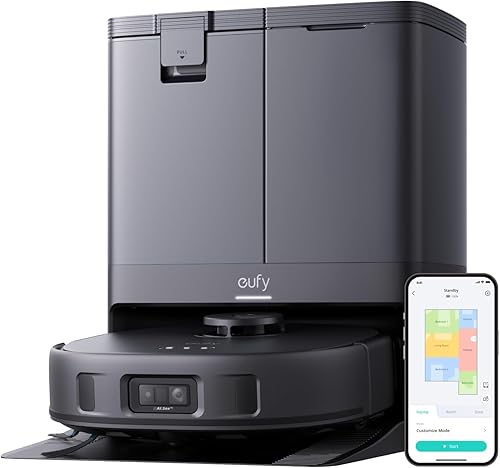
Key specs:
- 8,000Pa suction — strong enough for pet hair and embedded dirt on most surfaces
- LiDAR + AI obstacle avoidance
- Dual spinning mop pads with auto-lift on carpets
- 180-minute runtime
- All-in-one dock: self-empty, mop wash, and drying
Standout features:
- The price-to-feature ratio is the strongest in this roundup. At $899, the X10 Pro Omni includes every dock feature (self-empty, mop wash, drying) that competitors charge $1,400+ for.
- 8,000Pa suction is more than sufficient for 90% of households. Owner data shows strong pickup on hard floors and low-to-medium-pile carpets.
- The eufy app is clean and straightforward. Owner reviews note that initial setup and map editing are more intuitive than some competitors.
What could be better:
- Edge cleaning is not as thorough as models with extendable brushes (like the Roborock S8 MaxV Ultra or Dreame X40 Ultra). Baseboards may still show a thin line of dust.
- Obstacle avoidance, while capable, is not as refined as 3D-camera systems. Owners with cluttered floors report occasional bumps with small objects.
Who should buy this: Budget-conscious buyers who still want a full-featured vacuum-mop combo with a self-maintaining dock. This is the best option for getting 80% of flagship performance at roughly half the price.
Verdict: The smartest purchase for most people. Unless you specifically need the edge cleaning or extreme suction of the premium models, the X10 Pro Omni delivers outstanding results without the premium price tag.
5. Ecovacs Deebot N20 Pro Plus — Best Budget Robot Vacuum
Why it ranks here: At $499, the N20 Pro Plus packs 8,000Pa suction, LiDAR navigation, a vibrating mop, and bagless self-emptying into the most affordable capable package available. It proves that strong robot vacuum performance no longer requires a four-figure budget.
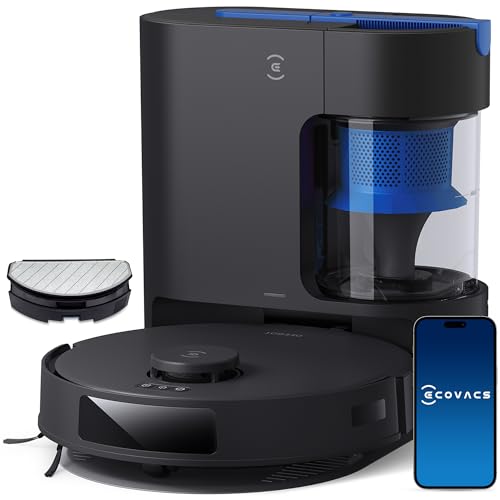
Key specs:
- 8,000Pa suction — matches models costing two to three times as much
- LiDAR navigation for accurate mapping
- Vibrating mop pad for light mopping
- Bagless self-emptying dock — no replacement bags needed
- 300-minute runtime — the longest in this roundup by a wide margin
Standout features:
- The 300-minute runtime is exceptional. Based on specs, this robot can clean homes up to 4,000+ sq ft on a single charge. Owner reviews from large homes confirm multi-room coverage without recharging.
- Bagless self-emptying eliminates the recurring cost of replacement bags. Over two to three years of ownership, this saves $50-$100 compared to bagged systems.
- 8,000Pa suction at $499 was flagship territory just 18 months ago. The data shows strong hard floor and medium-carpet performance.
What could be better:
- No 3D camera means obstacle avoidance relies on LiDAR alone. Owners report more frequent collisions with low-profile objects like shoes and pet bowls.
- The vibrating mop is functional but basic compared to the dual spinning or sonic systems found in higher-priced models. It handles light spills and dust mopping, not dried-on stains.
Who should buy this: First-time robot vacuum buyers, renters, and anyone who wants strong automated cleaning without spending over $500. Particularly well-suited for large homes on a budget thanks to the exceptional runtime.
Verdict: The best entry point into capable robot vacuums. The N20 Pro Plus competes with far more expensive models on suction and runtime while keeping the price accessible.
How We Evaluated
Every robot vacuum in this roundup was evaluated on the same criteria, using manufacturer specifications, published third-party data, and patterns from thousands of verified owner reviews:
- Suction power (Pa): Higher Pa ratings correlate with better deep-carpet extraction. All models listed were evaluated against published suction specs and cross-referenced with owner-reported performance on different floor types.
- Navigation technology: LiDAR-based navigation consistently outperforms camera-only and gyroscope systems in speed, accuracy, and coverage. Models with 3D cameras or AI-enhanced obstacle avoidance received higher marks for real-world reliability.
- Mopping capability: Evaluated based on mop type (sonic, spinning, vibrating), water delivery, mop lifting on carpets, and dock-based mop washing. Hot water washing consistently correlates with better long-term hygiene based on owner reports.
- Dock features: Self-emptying, mop washing, mop drying, and water tank refilling were all considered. Full-feature docks reduce daily maintenance significantly.
- Runtime: Longer runtime matters for larger homes. All runtimes listed are manufacturer-rated on minimum suction settings.
- Owner satisfaction: Verified owner reviews across Amazon, retailer sites, and robot vacuum forums were analyzed for recurring praise, complaints, and reliability data.
Frequently Asked Questions
Is a $1,500+ robot vacuum worth the money over a $500 model?
It depends on your home. For apartments or small homes with hard floors, a $499 model like the Ecovacs N20 Pro Plus delivers excellent results. The premium models justify their price in larger homes (2,000+ sq ft), multi-surface environments, homes with pets, and for buyers who want maximum automation — including hot water mop washing and advanced edge cleaning that budget models lack.
How often do robot vacuums need maintenance?
Most modern robot vacuums with self-emptying docks need the dustbin emptied every 30-60 days. Mop pads should be replaced every 2-3 months. Brush rolls should be checked for hair tangles monthly (less often with ZeroTangle designs). Filters need replacement every 3-6 months. Owner reviews consistently report 10-15 minutes of monthly maintenance.
Can robot vacuums replace a regular vacuum?
For daily maintenance on hard floors, yes. For deep carpet cleaning, most robot vacuums handle low-to-medium-pile well, but thick rugs and high-pile carpets still benefit from a dedicated upright vacuum. The models with 8,000Pa+ suction (like the Dreame X40 Ultra and Roborock S8 MaxV Ultra) come closest to replacing a traditional vacuum for most household needs.
Do robot vacuum mops actually clean well?
The sonic and spinning mop systems in 2026 models represent a significant improvement over the passive drag-mops of earlier generations. Based on owner data, models like the Roborock S8 MaxV Ultra and Dreame X40 Ultra handle daily dust, light spills, and kitchen grime effectively. They will not replace a hands-and-knees deep scrub for heavy stains, but they keep floors noticeably cleaner between manual cleaning sessions.
LiDAR vs. camera navigation — which is better?
LiDAR navigation is more consistent. It works in complete darkness, creates more accurate maps, and completes cleaning runs faster than camera-based systems. Camera-based systems (like iRobot’s) can be better at identifying specific objects, but they struggle in low light and tend to be slower in mapping. For most buyers, LiDAR is the better choice, which is why every model in this roundup uses it.