Best Solar Generator for Off-Grid Camping (2026) — Top Kits Compared
A solar generator is a portable power station paired with solar panels — giving you renewable, silent power anywhere the sun shines. For off-grid camping, this means no fuel, no noise, no emissions, and theoretically unlimited power as long as you have daylight.
The key to a good solar generator setup isn’t just the power station — it’s how well the station and panels work together. Solar input wattage, charge controller compatibility, panel portability, and real-world charging speed in imperfect conditions all matter.
Our top solar generator pick: the Jackery Explorer 1000 V2 + SolarSaga 200W panel. The kit delivers 1,070Wh of capacity, recharges in about 5 hours of sun, weighs under 30 lbs combined, and Jackery’s solar ecosystem is the most plug-and-play available.
Quick Comparison
| Solar Generator Kit | Kit Price | Capacity | Solar Input | Solar Charge Time | Total Weight | Best For |
|---|---|---|---|---|---|---|
| Jackery Explorer 1000 V2 + SolarSaga 200W | ~$900 | 1,070Wh | 400W max | ~5 hrs (200W panel) | ~30 lbs | Best Overall Kit |
| Jackery Explorer 300 Plus + SolarSaga 40W | $249 | 288Wh | 100W max | ~7 hrs (40W panel) | ~14 lbs | Best Budget Kit |
| EcoFlow Delta 3 Plus + 220W Panel | ~$1,300 | 1,024Wh | 500W max | ~4 hrs (220W panel) | ~40 lbs | Fastest Solar Charging |
| Anker Solix C1000 Gen 2 + 200W Panel | ~$950 | 1,056Wh | 600W max | ~4 hrs (200W panel) | ~35 lbs | Best Solar Input Specs |
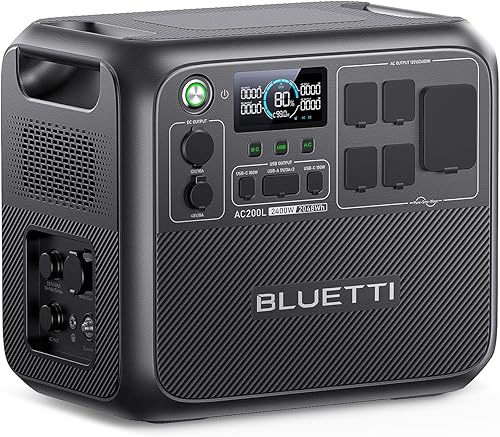
| Bluetti AC200L + PV200 Panel | ~$1,400 | 2,048Wh | 1,200W max | ~5 hrs (200W panel) | ~70 lbs | Best High-Capacity Solar |
1. Jackery Explorer 1000 V2 + SolarSaga 200W — Best Overall Solar Generator
Jackery has invested more in their solar ecosystem than any competitor. The SolarSaga panels are designed specifically for Jackery stations with matched connectors, optimized charge controllers, and no compatibility guesswork. The 1000 V2 + 200W panel kit is the best example of this: a complete, tested, plug-and-play solar generator that works immediately.
Why this kit wins:
- No compatibility confusion. The SolarSaga 200W panel plugs directly into the Explorer 1000 V2 with a matched connector. No adapters, no voltage worries, no research needed.
- 5-hour solar recharge with a single 200W panel in good sun. Arrive at camp by noon, have full power by evening. Add a second panel and cut that to about 2.5 hours.
- 22 lbs station + 8 lbs panel = 30 lbs total — light enough for two people to carry, or one person making two trips.
- Jackery’s solar panels fold flat for transport and include an integrated kickstand for optimal angle positioning.
Real-world solar performance: Perfect conditions (direct sun, no clouds, optimal angle) give you 80-90% of the panel’s rated wattage — so expect roughly 160-180W from a 200W panel. On partly cloudy days, output drops to 60-100W. Overcast days produce 30-50W. Plan for imperfect conditions.
What could be better:
- 400W max solar input means you’re capped at two 200W panels. The Anker and EcoFlow accept more.
- At ~$900 for the kit, it’s not cheap — but buying station and panels separately rarely saves money.
Verdict: The most user-friendly solar generator available. Jackery’s ecosystem removes the guesswork.
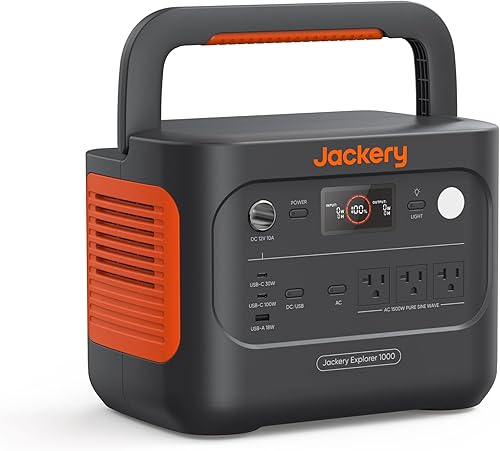
2. Jackery Explorer 300 Plus + SolarSaga 40W — Best Budget Solar Generator
For $249, you get a complete solar generator that works. The Jackery Explorer 300 Plus (288Wh) paired with the included 40W solar panel provides enough capacity for weekend device charging with the ability to recharge during the day.
Why it works on a budget:
- $249 all-in — power station + solar panel + cables. Nothing else to buy.
- 40W panel fully recharges the station in ~7 hours of sun. Set it up in the morning, have full power by evening. On a multi-day camping trip, this gives you functionally unlimited phone and device charging.
- 14 lbs total weight — lighter than most stand-alone power stations.
- Amazon’s best-selling solar generator with thousands of satisfied buyers validating reliability.
The limitation: 40W solar input is slow. You won’t recover meaningful charge in just a few hours of sun — it takes a full day. And 288Wh won’t run anything demanding. This is a device-charging solar setup, not a camp-powering one.
Verdict: The best entry point to solar power. Under $250 for a complete setup that just works.
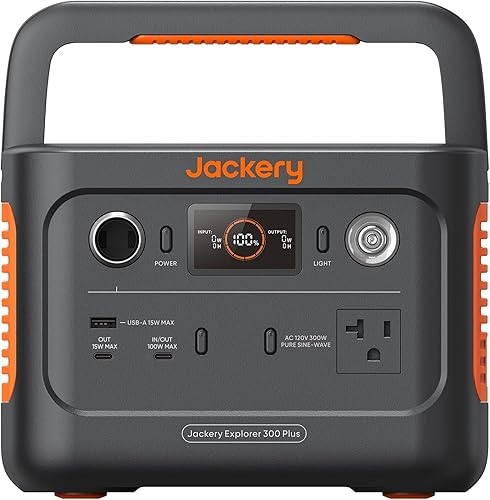
3. EcoFlow Delta 3 Plus + 220W Panel — Fastest Solar Charging
If solar charging speed is your top priority, the EcoFlow Delta 3 Plus combination of 500W maximum solar input and efficient MPPT charge controller delivers the fastest off-grid recharge. With a 220W panel, expect a full charge in about 4 hours of good sun. Add a second panel and you’re under 2.5 hours.
Why it’s the fastest:
- 500W max solar input accepts more panel wattage than the Jackery (400W)
- EcoFlow’s solar panels use high-efficiency monocrystalline cells with integrated MPPT for maximum energy harvest
- X-Stream solar tracking in the app shows real-time solar input and estimates time to full charge
- 1,024Wh capacity with 2,400W output means this is a serious solar generator, not just a panel charger
What could be better:
- ~$1,300 for station + panel is a significant investment
- EcoFlow panels aren’t as compact when folded as Jackery’s SolarSaga line
- 40+ lbs combined weight makes this a car-camping-only setup
Verdict: The performance leader for solar charging speed. Best for users who want maximum off-grid recharge capability.
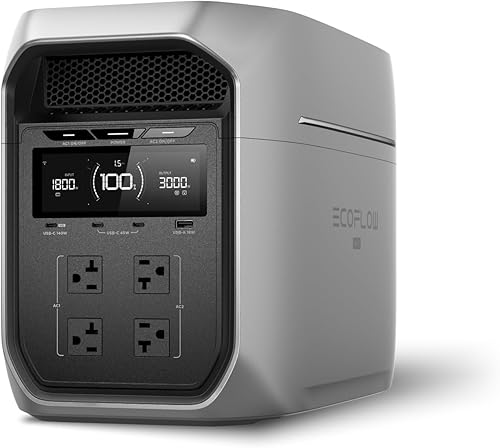
4. Anker Solix C1000 Gen 2 + 200W Panel — Best Solar Input Specs
Anker Solix C1000 Gen 2 accepts up to 600W of solar input — the highest in the 1000Wh class. This means you can connect three 200W panels for extremely fast solar charging, or a single 200W panel for a balanced setup.
Why it has the best solar specs:
- 600W max solar input is the highest in any 1000Wh-class station
- With 200W panel: ~4-hour full recharge. With 400W of panels: ~2 hours.
- $649 station + ~$300 panel = ~$950 — competitive with the Jackery kit
- 4,000-cycle battery means your solar investment lasts 10+ years
What could be better:
- Anker’s solar panels don’t have the brand ecosystem polish of Jackery’s. Panel compatibility works fine but feels more generic.
- No pre-made bundle deals as attractive as Jackery’s solar generator kits.
Verdict: The best raw solar charging capability. Choose this if you plan to add multiple panels over time.
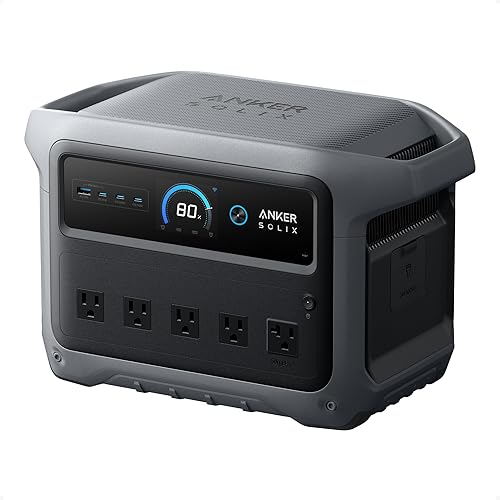
5. Bluetti AC200L + PV200 Panel — Best High-Capacity Solar Generator
For extended off-grid stays where you need both large capacity and solar recharging, the Bluetti AC200L’s 2,048Wh paired with Bluetti’s PV200 panel is the heavy-duty option. 1,200W maximum solar input means you can connect a serious solar array for rapid recharging of the large battery.
Why it works for extended off-grid:
- 2,048Wh base capacity means you start each day with substantial stored power even on cloudy days when solar performance drops
- 1,200W max solar input — connect four 200W panels and fully recharge in about 2.5 hours
- Dual-input charging lets you charge from solar AND a car charger simultaneously during partly cloudy conditions
- Expandable to 8,192Wh for truly serious off-grid installations
What could be better:
- ~$1,400 for station + one panel, and a full multi-panel setup exceeds $2,000
- 70+ lbs combined weight (station + panel) makes this a permanent setup, not portable
- Returns diminish quickly — most campers don’t need 2,048Wh of capacity
Verdict: The heavy-duty solution for serious off-grid setups. Overkill for weekend camping, essential for extended boondocking.
Solar Panel Buying Guide for Power Stations
How Much Solar Panel Wattage Do You Need?
A rule of thumb: you want your panel wattage to be 15-25% of your station’s capacity (in Wh) for a reasonable 5-7 hour recharge.
| Station Capacity | Recommended Panel Wattage | Expected Recharge Time |
|---|---|---|
| 200-300Wh | 40-60W | 5-8 hours |
| 500-700Wh | 100-150W | 5-7 hours |
| 1,000-1,100Wh | 200-300W | 4-6 hours |
| 2,000Wh+ | 400W+ | 5-7 hours |
Portable vs Rigid Panels
Portable folding panels (recommended for camping): Fold down for transport, include kickstands, weigh 10-20 lbs for 100-200W. Slightly less efficient than rigid panels but far more practical for camping.
Rigid panels (for RV/permanent installation): Higher efficiency (20-22% vs 18-20% for portable), but not portable. Mount on your RV roof or a fixed structure.
Real-World vs Rated Solar Output
Manufacturer wattage ratings assume perfect conditions: direct midday sun, optimal panel angle, cool temperature. Real-world output is typically 70-85% of rated wattage in good conditions and 30-50% on cloudy days. Always size your panels with this reduction in mind.
FAQ
Can I use any solar panel with any power station?
Technically, yes — as long as the panel’s voltage and amperage are within the station’s solar input specifications. But matched brand panels (Jackery SolarSaga with Jackery stations, EcoFlow panels with EcoFlow stations) guarantee compatibility and simplify setup. Third-party panels work but require checking voltage/amperage specs and may need adapter cables.
How long does it take to solar charge a power station?
Under ideal conditions, divide your station’s capacity by 80% of your panel’s rated wattage. Example: 1,000Wh station with a 200W panel: 1,000 ÷ (200 × 0.8) = 6.25 hours. On cloudy days, double that estimate.
Do solar panels work on cloudy days?
Yes, but output drops significantly. Expect 30-50% of rated output on overcast days and 10-20% under heavy cloud cover. Solar panels generate power from light, not direct sun — but the difference is dramatic. On a cloudy day, a 200W panel might produce only 40-80W.
Can I charge my power station from solar while using it?
Yes — this is called “pass-through charging” and all modern power stations support it. Your station will simultaneously draw from solar input and supply power to connected devices. If solar input exceeds your device draw, the battery charges. If device draw exceeds solar input, the battery slowly depletes but much slower than without solar.
Prices current as of February 2026. Updated monthly. Output Report earns a commission on purchases through our affiliate links at no extra cost to you.