Best Portable Power Station Under $500 (2026) — Compared & Ranked
You don’t need to spend a thousand dollars to get a capable portable power station. The sub-$500 bracket has gotten remarkably competitive, with LiFePO4 batteries, fast charging, and 1000+Wh capacity now available at prices that were unthinkable two years ago.
Our top pick under $500 is the Anker Solix C1000 Gen 2 Check Price on Amazon, which regularly drops from $649 to $449 during frequent Anker sales. At sale price, it’s the most capable power station you can buy under $500 — period. But there are also strong options at the best options at every price tier from $149 to $499.
Quick Comparison
| Power Station | Street Price | Capacity | Output | Weight | Battery | Best For |
|---|---|---|---|---|---|---|
| Anker Solix C1000 Gen 2 | ~$449 (sale) | 1056Wh | 2000W | 25 lbs | LiFePO4 | Best Overall Under $500 |
| Anker Solix C800 Plus | $499 | 768Wh | 1600W | 22 lbs | LiFePO4 | Best Mid-Range |
| Oupes 1200 | $399 | 992Wh | 1200W | 25 lbs | LiFePO4 | Best $/Wh Ratio |
| Jackery Explorer 600 Plus | $399 | 632Wh | 800W | 17 lbs | LiFePO4 | Best Portable Mid-Range |
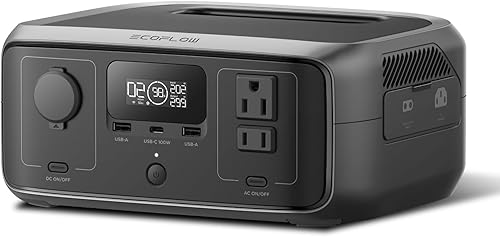
| EcoFlow River 3 | $169 | 245Wh | 600W | 7.8 lbs | LiFePO4 | Best Under $200 |
| Bluetti AC2A | $149 | 204Wh | 300W | 7.6 lbs | LiFePO4 | Cheapest LiFePO4 |
1. Anker Solix C1000 Gen 2 — Best Overall Under $500
Why it’s #1: This is a premium power station that happens to go on sale constantly. Anker runs promotions roughly every 4-6 weeks, and the C1000 Gen 2 regularly hits $449 — sometimes lower. At that price, nothing else comes close.
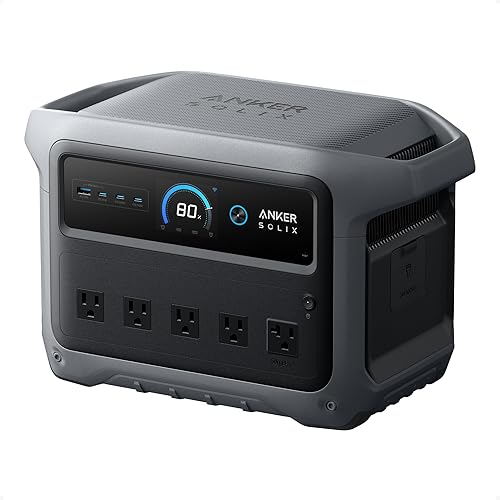
The MSRP is $649, which is technically above our $500 threshold. But Anker’s sale cadence is so predictable that paying full price is a choice, not a necessity. Set a price alert on CamelCamelCamel or Keepa and wait for the next drop.
What you get for under $500:
- 1056Wh of LiFePO4 capacity — more than any competitor at this price
- 2000W continuous output handles blenders, griddles, mini fridges, and power tools
- 49-minute full charge — the fastest in any 1000Wh unit
- 4000-cycle battery rated for 10+ years
- 600W solar input for serious off-grid use
- 10ms UPS switchover for home backup duty
Who should wait for this: Anyone who doesn’t need a power station this week. If you can wait 2-4 weeks for the next sale, this is hands-down the best value in the entire portable power station market.
Verdict: The best power station under $500 — if you buy it on sale. Set a price alert and be patient.
2. Anker Solix C800 Plus — Best Always-Available Mid-Range
Why it’s on this list: At $499 every day (no sale required), the C800 Plus offers a strong mid-range option with 768Wh capacity and 1600W output. It’s the reliable buy when you need a power station now.
What you get for $499:
- 768Wh LiFePO4 capacity — enough for a weekend camping trip or 8+ hours of fridge backup
- 1600W output runs most common appliances
- 22 lbs — lighter than the 1000Wh class
- Fast AC charging under an hour
- Clean Anker build quality and 5-year warranty
What could be better:
- 768Wh is a noticeable step down from the C1000’s 1056Wh. For a day trip or a single overnight, it’s plenty. For extended use, you’ll feel the smaller capacity.
- 1600W output won’t run high-draw appliances like space heaters at full blast.
Who should buy this: Anyone who needs a power station today and wants a reliable mid-range option without playing the sale-price waiting game.
Verdict: Solid, dependable, and always available at $499. Not as exciting as the C1000 on sale, but never disappointing.
3. Oupes 1200 — Best $/Wh Ratio Under $500
Why it’s on this list: At $399 for 992Wh, the Oupes 1200 delivers the most capacity per dollar of any power station on the market. Nobody else gives you nearly 1000Wh of LiFePO4 power for under $400.
What you get for $399:
- 992Wh LiFePO4 capacity — nearly 1000Wh at the $400 price point
- 1200W continuous output
- LiFePO4 battery with 3500+ cycle lifespan
- Multiple port options including USB-C PD
What could be better:
- Oupes is a newer brand without the track record of Anker, EcoFlow, or Jackery. Customer support infrastructure is less mature.
- 1200W output is lower than similarly-priced options from bigger brands
- Build quality and app experience don’t match the major brands
- Fewer accessories and ecosystem options
Who should buy this: Budget-maximizers who prioritize raw capacity over brand name and polish. If your primary question is “how much battery can I get for $400,” this is the answer.
Verdict: The value play. You’re trading brand polish and ecosystem for raw watt-hours. If you’re okay with that tradeoff, no one beats Oupes on price-to-capacity.
4. Jackery Explorer 600 Plus — Best Portable Mid-Range
Why it’s on this list: At 17 lbs with 632Wh, the Explorer 600 Plus hits the middle ground between “enough power to be useful” and “light enough to actually carry.” It’s the weekender’s power station.
What you get for $399:
- 632Wh LiFePO4 capacity
- 800W continuous output
- 17 lbs — meaningfully lighter than 1000Wh class stations
- Jackery’s famously simple interface
- Strong brand reputation and customer support
What could be better:
- 800W output limits you to smaller appliances. No blenders, no griddles, no space heaters.
- 632Wh is a middle-ground capacity — more than the compacts, but you’ll wish for more on multi-day trips.
- At $399, the Oupes 1200 gives you 360Wh more capacity for the same price.
Who should buy this: Campers and travelers who want a portable, trusted-brand station that covers devices, lights, small fans, and moderate charging needs without breaking the bank or your back.
Verdict: The sensible mid-range pick for people who value portability and brand trust over maximum specs.
5. EcoFlow River 3 — Best Under $200
Why it’s on this list: At $169, the EcoFlow River 3 gives you LiFePO4 reliability, IP54 weather resistance, and 600W output in a package that weighs less than a gallon of milk. It’s the best compact power station at any price.
What you get for $169:
- 245Wh LiFePO4 capacity
- 600W output — double the wattage of competing compact stations
- 7.8 lbs — genuinely ultraportable
- IP54 weather resistance — use it in light rain
- 57-minute full charge
- EcoFlow app with full monitoring
What could be better:
- 245Wh runs out fast if you’re powering anything beyond phones and laptops
- Not meant for appliances — this is a device charger with an AC outlet, not a home backup solution
Who should buy this: First-time buyers, students, festival-goers, light campers, and anyone who wants portable power without spending more than the cost of a nice dinner out.
Verdict: The obvious pick under $200. Nothing else gives you this much capability for $169.
6. Bluetti AC2A — Cheapest LiFePO4 Power Station
Why it’s on this list: At $149, the AC2A is the most affordable way to own a LiFePO4 portable power station. If your budget is truly minimal, this gets you in the game.

What you get for $149:
- 204Wh LiFePO4 capacity
- 300W continuous output
- 7.6 lbs
- Bluetooth app control
- 3000+ cycle battery lifespan
What could be better:
- 300W output and 204Wh capacity are limiting. This charges phones and runs small LED lights, and that’s about it.
- The EcoFlow River 3 costs just $20 more and gives you 41Wh more capacity, double the output, and IP54 weather resistance. Hard to justify the AC2A unless you absolutely can’t spend $169.
Who should buy this: Buyers on the tightest possible budget who want LiFePO4 battery chemistry. Emergency kit additions where minimal power is better than none.
Verdict: The price floor for LiFePO4. Functional but limited — spend the extra $20 on the EcoFlow River 3 if you possibly can.
How We Chose These
For a budget roundup, value is everything. We calculated the effective cost per watt-hour for each station, then balanced that against output wattage, charging speed, build quality, and brand reliability. A station that costs less per Wh but falls apart in a year isn’t a good value. We only included LiFePO4 battery stations because the longevity advantage (3000+ cycles vs ~500 for lithium-ion) makes them the better long-term investment even at a slightly higher upfront cost.
We also tracked real sale prices, not just MSRPs. Several stations on this list have “regular” prices above $500 but spend more time on sale than at full price.
Frequently Asked Questions
Is it worth buying a cheap power station vs. spending more?
Depends on your use case. A $169 River 3 handles phone charging and camp lights perfectly — spending $800 more for a 1000Wh unit would be wasteful if that’s all you need. But if you want to run a mini fridge, power tools, or a CPAP, the compact budget stations physically can’t do the job. Buy based on what you’ll actually plug into it, not on getting the biggest number for the least money.
How often do portable power stations go on sale?
Major brands run sales frequently. Anker and EcoFlow drop prices roughly every 4-6 weeks, with the biggest discounts during Amazon Prime Day (July), Black Friday, and brand-specific anniversary sales. Jackery and Bluetti follow similar patterns. We recommend setting price alerts on CamelCamelCamel or Keepa for any station over $300 — you’ll almost always find it cheaper within a month.
Should I buy a bigger station or two smaller ones?
One bigger station is almost always better. You get more usable capacity (no losses from managing two units), simpler setup, higher output from a single unit, and easier transport. The exception: if you need power in two locations simultaneously (campsite + car, or two rooms during an outage), two smaller units make sense.
What’s the most important spec when buying on a budget?
Capacity (Wh) and output (W), in that order. Capacity determines how long it runs. Output determines what it can run. A 1000Wh station with only 300W output has great endurance but can’t power anything substantial. A 200Wh station with 2000W output can power almost anything — for about ten minutes. You need enough of both for your specific use case. Our guide on what size portable power station do I need walks through the math.