Best Portable Power Station for RV (2026) — Compared & Ranked
RV power demands sit between camping and home backup. You need more capacity than a weekend camper (residential fridge, microwave, AC) but more portability than a permanent home battery. The right power station for an RV depends on whether you’re a weekender who boondocks occasionally or a full-timer who relies on off-grid power daily.
Our top RV pick: the EcoFlow Delta 3 Plus. Its 2,400W output runs RV air conditioning (with the right BTU rating), expandability to 5kWh handles multi-day boondocking, and the EcoFlow app lets you monitor everything from the comfort of your dinette.
Quick Comparison for RV Use
| Power Station | Price | Capacity | Output | Weight | Expandable | Best For |
|---|---|---|---|---|---|---|
| EcoFlow Delta 3 Plus | $999 | 1,024Wh | 2,400W | 28 lbs | Up to 5,120Wh | Best Overall RV Pick |
| Bluetti AC200L | $1,099 | 2,048Wh | 2,400W | 62 lbs | Up to 8,192Wh | Best High-Capacity |
| Anker Solix C1000 Gen 2 | $649 | 1,056Wh | 2,000W | 25 lbs | Up to 3,168Wh | Best Value for RV |
| EcoFlow Delta Pro 3 | $2,699 | 4,096Wh | 4,000W | 114 lbs | Up to 12kWh+ | Best for Full-Timers |
| Jackery Explorer 2000 V2 | $799 | 2,042Wh | 2,200W | 39 lbs | Yes | Best Mid-Range Capacity |
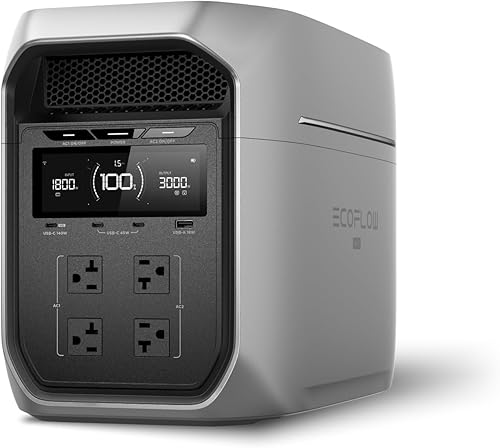
1. EcoFlow Delta 3 Plus — Best Overall for RV
The Delta 3 Plus balances the three things RVers care about most: enough output to run real appliances, enough capacity for overnight boondocking, and enough expandability to grow your system as your needs evolve.
Why it works for RVs:
- 2,400W output handles RV microwaves (900-1,100W), residential fridges (100-400W startup), and small RV air conditioners (some 5,000 BTU models run at 500-600W once stabilized, though startup draw is higher)
- Expandable to 5,120Wh — enough for a full weekend of boondocking with moderate use
- 56-minute charging means you can fully recharge while driving between spots or during a quick hookup stop
- 500W solar input pairs well with rooftop RV solar panels for passive daytime recharging
- 10ms UPS switchover provides seamless transition when you unplug from shore power
What could be better:
- $999 base price, and a full 5kWh expanded setup exceeds $2,000
- 28 lbs is fine for permanent RV installation but heavy if you’re moving it between RV and home regularly
- Won’t run larger RV air conditioners (13,500+ BTU) — those draw 1,500-2,000W starting and require more headroom
Who should buy this: RV owners who boondock regularly, want expandable capacity, and need to run moderate appliances off-grid. The sweet spot between price and capability for most RV setups.
2. Bluetti AC200L — Best High-Capacity for RV
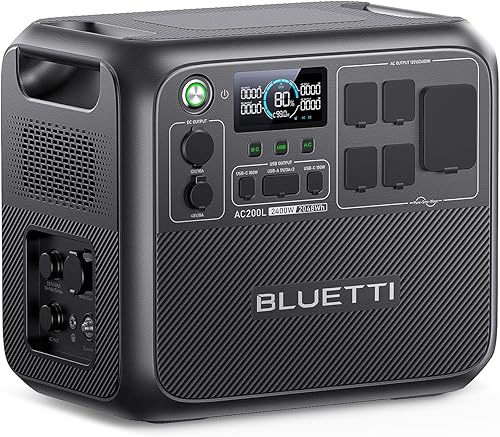
When you need serious capacity without expansion batteries, the Bluetti AC200L’s 2,048Wh is double what the 1000Wh-class stations offer. For RVers, that translates to overnight fridge operation plus device charging plus lights — all from the base unit, no expansion needed.
Why it works for RVs:
- 2,048Wh runs a residential RV fridge for 30+ hours — easily overnight and then some
- 2,400W output matches the EcoFlow with 7 AC outlets for simultaneous appliance use
- Expandable to a massive 8,192Wh for serious off-grid RV living
- Dual-input charging (AC + solar simultaneously) means you can charge from shore power and rooftop panels at the same time
What could be better:
- 62 lbs makes it essentially a permanent installation. You’re not casually moving this in and out of your RV.
- 20ms UPS switchover is slower than the EcoFlow’s 10ms — most RV electronics handle this fine, but it’s worth noting.
Verdict: The best single-unit solution for RVers who want set-and-forget capacity.
3. Anker Solix C1000 Gen 2 — Best Value for RV
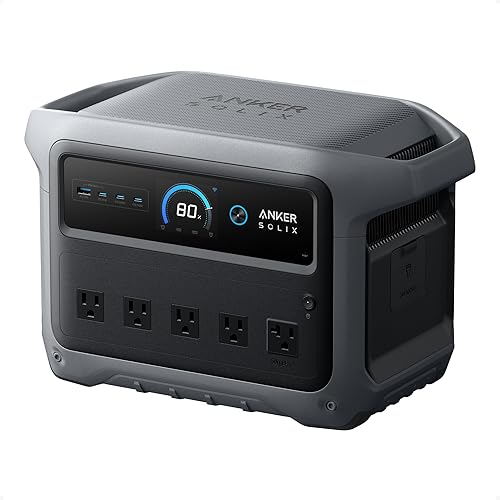
The Anker Solix C1000 Gen 2 offers the best balance of RV-relevant features at the most accessible price. 2,000W output handles most RV appliances (microwave, fridge, coffee maker), and the 49-minute charge time is ideal for topping off during a quick shore power stop.
Why it works for RVs:
- $649 is $350 less than the EcoFlow for similar core functionality
- 49-minute full charge — drive between RV parks and recharge during hookup time
- 25 lbs is light enough to move between RV and home for dual use
- 4,000-cycle battery handles daily RV use for a decade
What could be better:
- 2,000W output limits you compared to the 2,400W options — some RV microwaves and ACs may exceed this
- Expansion maxes at 3,168Wh — less headroom than EcoFlow or Bluetti for extended boondocking
Verdict: The best RV power station for weekenders and occasional boondockers who want value.
4. EcoFlow Delta Pro 3 — Best for Full-Time RV Living
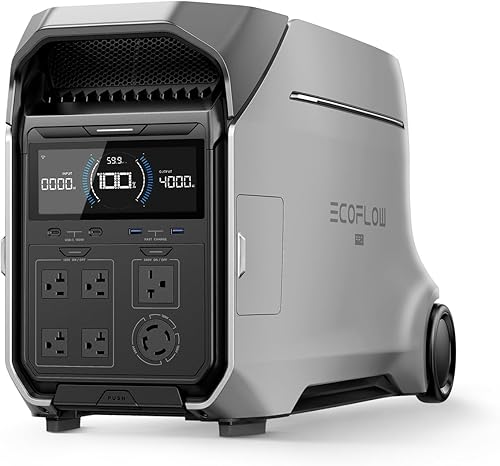
Full-timers need a different category of power. The Delta Pro 3 is essentially a home battery system on wheels. 4,096Wh base capacity, 4,000W output, and expansion to 12kWh+ means you can run an RV like a house — air conditioning, cooking appliances, entertainment systems, and all.
Why it works for full-timers:
- 4,000W output runs everything in an RV, including 13,500 BTU air conditioners
- 4,096Wh base capacity provides full-day off-grid power for typical RV use
- Expandable to 12kWh+ for multi-day off-grid stays with full appliance use
- Smart Home Panel integration can manage RV electrical circuits automatically
What could be better:
- $2,699 base price positions this as a serious investment
- 114 lbs requires a permanent installation — this is not portable in any practical sense
- Overkill for weekenders or moderate use — most RVers don’t need this much capability
Verdict: The ultimate RV power solution for full-timers and serious boondockers. Replaces a generator entirely.
5. Jackery Explorer 2000 V2 — Best Mid-Range Capacity
The Explorer 2000 V2 offers 2,042Wh in a package that’s 23 lbs lighter than the Bluetti AC200L. At 39 lbs, it’s on the edge of portable — you can move it when needed, even if it’s not comfortable to carry far.
Why it works for RVs:
- 2,042Wh provides extended boondocking capacity without expansion
- 2,200W output handles most RV appliances
- 39 lbs is manageable for occasional repositioning
- Jackery’s simple interface requires zero learning curve
Verdict: The right mid-range pick for RVers who want capacity without Bluetti’s 62 lb commitment.
RV Power Calculator
Common RV appliance draws to help you estimate your needs:
| Appliance | Running Watts | Startup Watts | Hours/Day | Daily Wh |
|---|---|---|---|---|
| Residential RV fridge | 100-200W | 400-800W | 8-12 (cycling) | 400-800Wh |
| RV microwave | 900-1,100W | 1,200-1,500W | 0.25 | 225-275Wh |
| RV AC (5,000 BTU) | 500-600W | 1,200-1,500W | 4-8 | 2,000-4,800Wh |
| RV AC (13,500 BTU) | 1,200-1,500W | 2,000-3,000W | 4-8 | 4,800-12,000Wh |
| LED lights (all) | 50-100W | — | 5 | 250-500Wh |
| TV + streaming device | 60-120W | — | 3-4 | 180-480Wh |
| Phone/laptop charging | 30-100W | — | 2-3 | 60-300Wh |
| Water pump | 50-100W | 200-300W | 0.5 | 25-50Wh |
| Coffee maker | 800-1,200W | — | 0.15 | 120-180Wh |
| CPAP machine | 25-65W | — | 7-8 | 175-520Wh |
Moderate boondocking day (fridge + lights + devices + coffee + TV): ~1,200-2,000Wh Heavy boondocking day (add microwave + water pump): ~1,600-2,500Wh Full comfort (add small AC): ~3,600-7,000Wh
FAQ
Can a portable power station run my RV air conditioner?
It depends on the AC size. Small 5,000 BTU units running at 500-600W can be powered by 2,000W+ stations, but they need 1,200-1,500W surge capacity on startup. Standard 13,500 BTU rooftop units draw 1,200-1,500W running and 2,000-3,000W on startup — only the EcoFlow Delta Pro 3 (4,000W) handles these comfortably. Soft-start kits ($80-150) can reduce startup surge by 50-70%, making larger ACs compatible with smaller stations.
Should I connect my portable power station to my RV’s electrical system?
For casual use, plugging individual appliances directly into the power station works fine. For a more integrated setup, some stations (like the EcoFlow Delta Pro 3 with Smart Home Panel) can connect to your RV’s electrical panel and power circuits directly. This requires installation knowledge or a professional electrician. Don’t attempt to wire a power station into your RV’s electrical system without proper expertise.
How do I charge a power station in my RV while driving?
Most power stations include a 12V car charger cable. Plug it into your RV’s 12V outlet or wire it directly to your vehicle’s alternator circuit. Charging from a 12V source is slower (typically 5-8 hours for a full charge) but effective for topping off between stops. Some RVers install a dedicated high-amperage circuit from their alternator to charge faster.
Portable power station vs gas generator — which is better for RVs?
Power stations are quieter (many campgrounds ban generators), emission-free (safe around people and pets), and require no fuel storage or maintenance. Generators offer unlimited runtime with fuel, higher peak output, and lower cost per watt-hour for heavy users. For weekenders and moderate boondockers, a power station is better. For full-timers running AC all day, a generator or a very large battery system (Delta Pro 3 with expansion) is more practical.
Prices current as of February 2026. Updated monthly. Output Report earns a commission on purchases through our affiliate links at no extra cost to you.