Best Portable Power Station for CPAP Machine (2026) — Sleep Anywhere
If you use a CPAP machine, losing power isn’t just inconvenient — it disrupts your sleep therapy and potentially your health. Whether you’re camping, traveling, dealing with power outages, or just want backup peace of mind, a portable power station keeps your CPAP running without compromise.
The good news: CPAP machines are remarkably power-efficient. Most modern units draw 30-60W, which means even a small, affordable power station can keep you breathing comfortably for multiple nights.
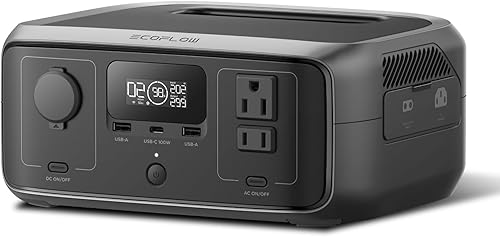
Our top CPAP pick: the EcoFlow River 3. At just $169 and 7.8 lbs, it powers most CPAP machines for 3-4 nights without recharging — and its IP54 water resistance protects it during camping trips.
CPAP Power Consumption Quick Guide
Before diving into picks, here’s what your CPAP actually draws:
| CPAP Type | Power Draw (No Humidifier) | Power Draw (With Humidifier) | Power Draw (Heated Tube + Humidifier) |
|---|---|---|---|
| ResMed AirSense 11 | ~25W | ~40-50W | ~55-65W |
| Philips DreamStation 2 | ~20W | ~35-45W | ~50-60W |
| ResMed AirMini (travel) | ~15-20W | N/A (no humidifier) | N/A |
| Generic CPAP | ~25-30W | ~40-55W | ~55-70W |
Key insight: Disabling the heated humidifier and heated tube cuts power draw by 50-60%. For camping or backup use, most people can comfortably use their CPAP without humidification for a night or two.
Quick Comparison for CPAP Use
| Power Station | Price | Capacity | CPAP Nights (No Humid.) | CPAP Nights (With Humid.) | Weight | Best For |
|---|---|---|---|---|---|---|
| EcoFlow River 3 | $169 | 245Wh | 3-4 nights | 1-2 nights | 7.8 lbs | Best Overall for CPAP |
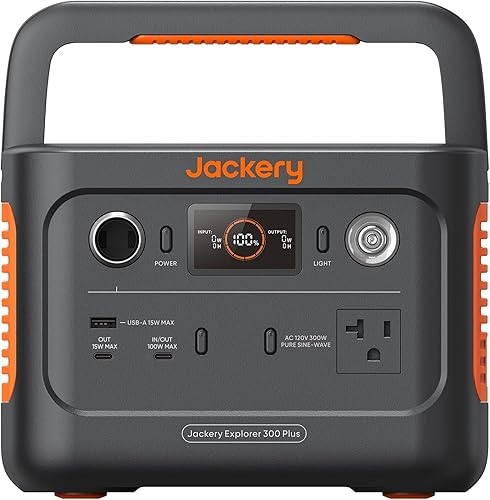
| Jackery Explorer 300 Plus | $199 | 288Wh | 4-5 nights | 2-3 nights | 8.3 lbs | Best with Solar Panel |
| Anker Solix C300 DC | $199 | 288Wh | 4-5 nights | 2-3 nights | 6.2 lbs | Lightest Option |
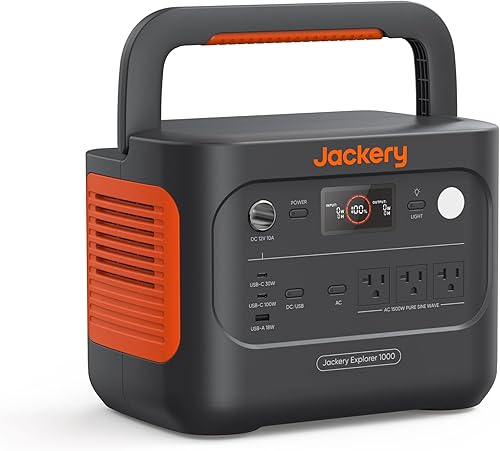
| Jackery Explorer 1000 V2 | $599 | 1,070Wh | 14+ nights | 7-8 nights | 22 lbs | Extended Off-Grid |
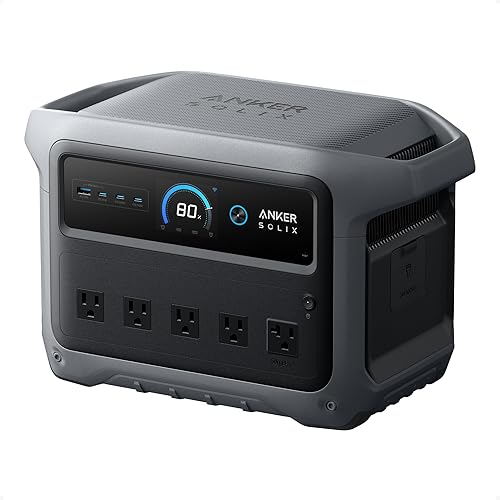
| Anker Solix C1000 Gen 2 | $649 | 1,056Wh | 14+ nights | 7-8 nights | 25 lbs | CPAP + Home Backup |
1. EcoFlow River 3 — Best Overall for CPAP
For most CPAP users, the River 3 is the ideal pairing. Here’s why: a typical CPAP without humidification draws about 25W. The River 3’s 245Wh capacity divided by 25W gives you roughly 8-9 hours per charge — one full night with margin. For a weekend camping trip, that’s 3-4 nights of sleep therapy from a single charge (assuming 7 hours of use per night at ~25W = 175Wh consumed, leaving buffer).
Why it works for CPAP:
- 245Wh provides 3-4 nights of CPAP use without humidification
- 7.8 lbs adds almost nothing to your camping gear
- 57-minute recharge means you can top it off during the day even on solar
- IP54 water resistance — important when your power station is next to your tent bed
- Silent operation at 30dB won’t disturb your sleep (your CPAP is louder)
- $169 is less than one night in a hotel when you can’t sleep without your CPAP
The limitation: If you need heated humidification (50-65W draw), you’ll get 1-2 nights instead of 3-4. For humid climates where you can skip the humidifier, this isn’t an issue. For dry climates where humidification is essential, consider the 300Wh options below.
Verdict: The best balance of price, weight, and CPAP runtime for weekend use.
2. Jackery Explorer 300 Plus — Best with Solar Panel Kit
The Jackery Explorer 300 Plus edges ahead on raw runtime (288Wh vs 245Wh, adding roughly one extra night of use), but the real advantage is the available solar panel kit. For $249, you get the power station plus a 40W solar panel — which means theoretically unlimited CPAP runtime on extended camping trips.
Why it works for CPAP:
- 288Wh gives you 4-5 nights without humidification
- 40W solar panel recharges the station in about 7 hours of sun — you’ll never run out on a camping trip
- 25dB operation is the quietest in its class — truly silent next to your sleeping bag
- 8.3 lbs is still ultra-portable
- Jackery’s simple interface means no fumbling with settings in the dark
The limitation: 300W output is lower than the River 3’s 600W. This doesn’t affect CPAP use at all (CPAPs draw under 70W even with full humidification), but it means you can’t simultaneously power high-draw devices.
Verdict: The best option for extended camping trips where solar recharging gives you unlimited nights.
3. Anker Solix C300 DC — Lightest CPAP Power Station
At just 6.2 lbs, the Anker C300 DC is the lightest power station suitable for CPAP use. It packs 288Wh into a form factor that genuinely fits in a backpack alongside your CPAP travel case.
Why it works for CPAP:
- 6.2 lbs — lighter than most CPAP machines themselves
- 288Wh provides 4-5 nights without humidification
- Three 140W USB-C ports are useful for charging your phone and other devices simultaneously
- Compact enough for airline carry-on alongside your CPAP
The limitation: This is a DC-focused unit. It has USB-C and 12V outputs but no standard AC outlet. Most modern CPAPs can run on DC power with the right adapter cable, but check your specific model’s compatibility before buying.
Verdict: The pick for travelers and backpackers who count every ounce.

4. Jackery Explorer 1000 V2 — Extended Off-Grid CPAP Use
If you’re spending a week or more off-grid — extended camping trips, van life, remote cabin stays — you need capacity that lasts. The Jackery Explorer 1000 V2’s 1,070Wh powers a CPAP for 14+ nights without humidification, or 7-8 nights with full humidification. That’s an entire vacation on a single charge.
Why it works for extended CPAP use:
- 1,070Wh is enough for two full weeks of nightly CPAP use
- 22 lbs is manageable for car camping and van life
- Pair with a 200W solar panel and you’ll never run out during an extended trip
- 1,500W output means you can also run camp gear alongside your CPAP
- Built-in app monitoring shows exactly how many hours of CPAP runtime remain
The limitation: At $599 and 22 lbs, this is overkill for weekend use. The River 3 or 300 Plus handle weekend trips for $400 less.
Verdict: The right choice when you’re spending a week or more away from wall power.
5. Anker Solix C1000 Gen 2 — CPAP + Home Backup
If you want a single power station that handles both CPAP backup during outages and camping use, the Anker Solix C1000 Gen 2 is the multi-purpose solution. Its 10ms UPS switchover keeps your CPAP running seamlessly when the power goes out — you won’t even wake up.
Why it works for CPAP + home backup:
- 10ms UPS switchover means zero interruption to your CPAP during power outages
- 1,056Wh powers your CPAP for 14+ nights, or your CPAP + a fridge + router for 10+ hours during an outage
- Keep it plugged in next to your bed as a permanent UPS for your CPAP machine
- Take it camping on weekends with no need for a second, smaller unit
The limitation: At 25 lbs and $649, this is more station than most CPAP-only users need. But if you also want home backup capability, it’s the most efficient single-device solution.
Verdict: The best dual-purpose option if you want CPAP backup at home AND camping power in one device.
CPAP Runtime Calculator
Here’s how to estimate your specific runtime:
Formula: (Power station Wh × 0.85) ÷ (Your CPAP wattage × Hours per night) = Number of nights
The 0.85 factor accounts for inverter efficiency loss (converting DC battery to AC outlet).
Example: EcoFlow River 3 (245Wh) with ResMed AirSense 11 at 25W for 7 hours per night: (245 × 0.85) ÷ (25 × 7) = 208 ÷ 175 = 1.19 charges per night… which means roughly 3.5 nights before recharging.
Pro tip: If your CPAP supports DC input (many ResMed and Philips models do with the right cable), skip the AC inverter entirely. Running on DC eliminates the 15% efficiency loss, extending your runtime by about 15-20%. Check your manufacturer’s accessories for a 12V DC adapter.
FAQ
Will a portable power station damage my CPAP machine?
No. Modern portable power stations output clean sine wave AC power that matches or exceeds the quality of wall outlet power. All five stations in this roundup use pure sine wave inverters, which are safe for sensitive medical electronics.
Can I use my CPAP’s heated humidifier with a portable power station?
Yes, but it roughly doubles your power consumption from ~25W to ~50-65W. This cuts your available nights per charge in half. For short trips, most CPAP users can comfortably skip humidification. For dry climates or extended trips, either choose a larger capacity station or plan to recharge via solar during the day.
Will my CPAP alarm if the power station runs out during the night?
Most CPAP machines simply stop when power is lost — they don’t produce a loud alarm. You’ll likely notice the change in air pressure and wake up naturally. To prevent this, use the power station app (if available) to set a low-battery notification on your phone, or simply ensure your station has enough capacity for the full night with margin.
Can I bring a portable power station on an airplane for my CPAP?
Power stations with lithium batteries above 100Wh are generally prohibited in checked luggage and restricted in carry-on by most airlines. The Anker C300 DC (288Wh) exceeds the typical 100Wh carry-on limit. For air travel, consider the ResMed AirMini travel CPAP with its own travel battery, or check your airline’s specific policies. The FAA does allow CPAP machines and their batteries as medical devices, but power stations are classified differently.
How do I connect my CPAP to a portable power station?
Simply plug your CPAP’s standard AC power cord into the power station’s AC outlet, just like you’d plug it into a wall. Turn the power station on, then turn your CPAP on. For DC connections (which are more efficient), you’ll need a manufacturer-specific DC cable — search “[your CPAP model] 12V DC cable” for options.
Prices current as of February 2026. Updated monthly. Output Report earns a commission on purchases through our affiliate links at no extra cost to you.