Best Portable Power Station for Camping (2026) — Compared & Ranked
Keeping your gear charged at the campsite shouldn’t require a noisy gas generator or a trunk full of disposable batteries. After comparing specs, charging speeds, weight, solar compatibility, and real-world capacity across dozens of models, we narrowed down the best portable power stations for camping in 2026.
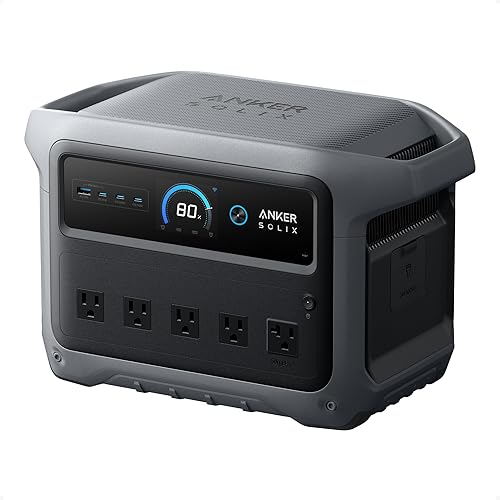
Our top pick is the Anker Solix C1000 Gen 2 Check Price on Amazon. At 25 lbs with 1056Wh of LiFePO4 capacity and a 49-minute full charge, it hits the sweet spot between power and portability that most campers actually need. But the right station depends on how you camp — so we picked the best option for five different camping styles.
Quick Comparison
| Power Station | Price | Capacity | Output | Weight | Charge Time | Best For |
|---|---|---|---|---|---|---|
| Anker Solix C1000 Gen 2 | $649 | 1056Wh | 2000W | 25 lbs | 49 min | Best Overall |
| Jackery Explorer 1000 V2 | $599 | 1070Wh | 1500W | 22 lbs | 1.7 hrs | Best for Portability |
| EcoFlow River 3 | $169 | 245Wh | 600W | 7.8 lbs | 57 min | Best Budget |
| EcoFlow Delta 3 Plus | $999 | 1024Wh | 2400W | 28 lbs | 56 min | Best for Extended Trips |
| Jackery Explorer 300 Plus | $199 | 288Wh | 300W | 8.3 lbs | 2 hrs | Best Ultralight |
1. Anker Solix C1000 Gen 2 — Best Overall for Camping
Why it’s our #1 pick: The Anker Solix C1000 Gen 2 delivers the best combination of capacity, charging speed, and weight in the 1000Wh class. You can charge it from zero to full in 49 minutes before leaving the house — faster than packing your cooler.
Key specs for campers:
- 1056Wh capacity — runs a 12V fridge for 40+ hours or charges a phone 80+ times
- 2000W output handles blenders, electric griddles, portable heaters, and CPAP machines
- 25 lbs — heavy enough to feel substantial, light enough to carry from the car to your site
- 600W max solar input charges it in roughly 2 hours with compatible panels
- 4000-cycle LiFePO4 battery rated for 10+ years of regular use
Standout features:
- The 49-minute HyperFlash charge is the fastest in any 1000Wh unit on the market. Forgot to charge it? Plug in while you load the car and it’s full before you’re done.
- At 25 lbs, it’s the lightest in its capacity class. Three pounds lighter than the EcoFlow Delta 3 Plus doesn’t sound like much until you’re carrying it 200 yards to a walk-in campsite.
- 600W solar input means a pair of 200W panels gets you a full charge in about 2 hours of direct sun. That’s real off-grid capability.
What could be better:
- 2000W output is strong but won’t run a space heater and an electric kettle simultaneously. The EcoFlow Delta 3 Plus handles that with 2400W.
- No IP rating means you need to keep it sheltered from rain. The EcoFlow River 3 has IP54 for weather resistance.
Who should buy this: Car campers, boondockers, and weekend warriors who want one station that does everything well. If you run a mini fridge, charge devices, and occasionally power small appliances at camp, this is the one.
Verdict: The best all-around camping power station for most people — fast charging, great capacity, competitive weight, and a price that frequently drops below $500 during sales.
2. Jackery Explorer 1000 V2 — Best for Portability
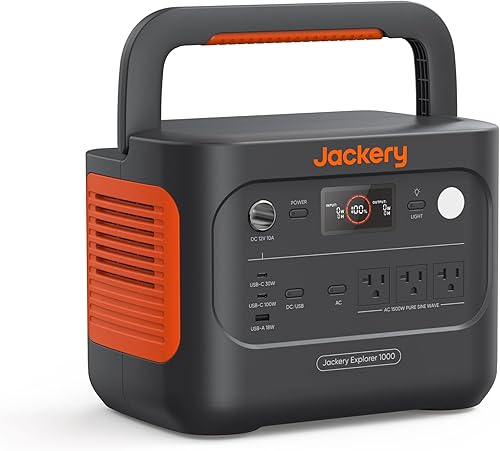
Why it’s on this list: At 22 lbs, the Jackery Explorer 1000 V2 is the lightest 1000Wh power station you can buy. If you prioritize carry weight above everything else, Jackery wins.
Key specs for campers:
- 1070Wh capacity — actually slightly more than the Anker
- 1500W output runs most camping appliances (but not the heaviest ones)
- 22 lbs — three pounds lighter than the Anker, six pounds lighter than EcoFlow
- 1-hour emergency charge mode when you’re in a rush
- Color-coded ports make setup foolproof even in the dark
Standout features:
- Jackery’s interface is the most intuitive in the business. Press one button, everything works. No app required (though the app is clean if you want it). Your non-techy camping buddy can figure this out in seconds.
- 22 lbs is genuinely noticeable when you’re carrying it any distance. On hikes to dispersed camping spots or carrying gear down a trail, those three pounds matter.
- The included emergency charge mode gets you to 80% in about an hour from a wall outlet.
What could be better:
- 1500W output is the lowest in the 1000Wh class. It won’t run a portable space heater (most draw 1500W) or a high-wattage blender. For most camping needs this is fine, but it limits your options.
- Not expandable. If you need more capacity later, you’re buying a second unit rather than adding a battery pack.
Who should buy this: Campers who carry their power station more than a few steps from the car. Hikers heading to dispersed sites. Anyone who values simplicity and wants a “just works” experience.
Verdict: The power station for campers who care most about weight and ease of use. Slightly less powerful than competitors, but genuinely easier to live with in the field.
3. EcoFlow River 3 — Best Budget Power Station for Camping
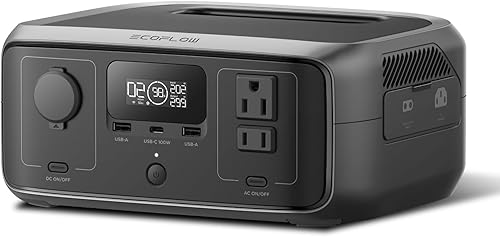
Why it’s on this list: At $169, the EcoFlow River 3 is the cheapest way to get LiFePO4 reliability, weather resistance, and enough power for phones, laptops, lights, and small fans. It’s the station for campers who don’t need to run appliances.
Key specs for campers:
- 245Wh capacity — charges a phone 20+ times, runs a laptop for 4-5 hours, powers LED camp lights all weekend
- 600W output handles phone chargers, laptops, small fans, LED lights, drone chargers, and camera batteries
- 7.8 lbs — throw it in a daypack without noticing the weight
- IP54 water and dust resistant — the only station in its price range you can use in light rain without worry
- 57-minute full charge from a wall outlet
Standout features:
- IP54 rating is a big deal for camping. Getting caught in a surprise rainstorm doesn’t mean scrambling to protect your power station. No competitor under $300 offers this.
- At 7.8 lbs, this is genuinely grab-and-go. Toss it in your pack for a day hike, keep it on the picnic table at camp, throw it in the kayak.
- 57-minute charging means you can top it off during a lunch stop if you’re road-tripping between campsites.
What could be better:
- 245Wh runs out faster than you’d expect on multi-day trips. If you’re running a fan all night or charging multiple devices daily, you’ll need to recharge by day two.
- 600W output means no blenders, no electric griddles, no hair dryers. This is a charging station, not an appliance runner.
Who should buy this: Weekend tent campers, backpackers who drive to the trailhead, kayak campers, and anyone whose power needs are limited to devices and lights. Also excellent as a secondary/backup unit.
Verdict: The best entry point into portable power for camping. It won’t run your mini fridge, but it’ll keep every device charged and your campsite lit for under $170.
4. EcoFlow Delta 3 Plus — Best for Extended Camping Trips
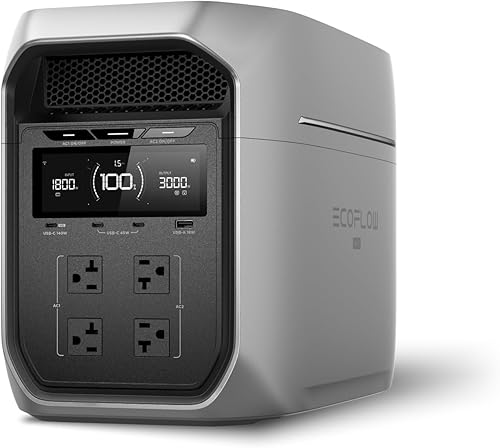
Why it’s on this list: When you need to run a mini fridge, a CPAP, a portable heater, AND keep all your devices charged for a week-long trip, the Delta 3 Plus has the output power and expandability to handle it.
Key specs for campers:
- 1024Wh capacity, expandable up to 5120Wh with extra batteries
- 2400W output — the highest in the 1000Wh class. Runs space heaters, electric griddles, blenders, and high-draw appliances
- 10ms UPS switchover — doubles as home backup when you’re not camping
- 500W solar input for serious off-grid solar setups
- 56-minute AC charge via X-Stream technology
Standout features:
- 2400W output means there’s basically nothing in a campsite you can’t run. Electric kettle for morning coffee? Done. Portable induction cooktop? No problem. That’s 400W more headroom than the Anker.
- Expandable to 5kWh is crucial for extended boondocking. Start with the base unit, add batteries as your needs grow. One weekend you’re car camping, next year you’re doing two-week dispersed trips with a solar setup.
- The EcoFlow app lets you monitor remaining capacity, set charge limits, and control outlets remotely. Useful when the station is in your vehicle and you’re sitting by the fire.
What could be better:
- 28 lbs and a $999 price tag. This is more power station than most weekend campers need. If you’re doing two-night car camping trips, the Anker C1000 gives you 90% of the capability for 65% of the price.
- No IP rating. For a station marketed toward outdoor use, the lack of weather resistance is frustrating. Keep it under a tarp.
Who should buy this: Serious campers doing week-long trips, boondockers with solar panel setups, van lifers who need expandability, and anyone running high-draw appliances at the campsite.
Verdict: Overkill for casual camping, perfect for extended off-grid trips. The highest output in its class and room to grow into a full solar generator system.
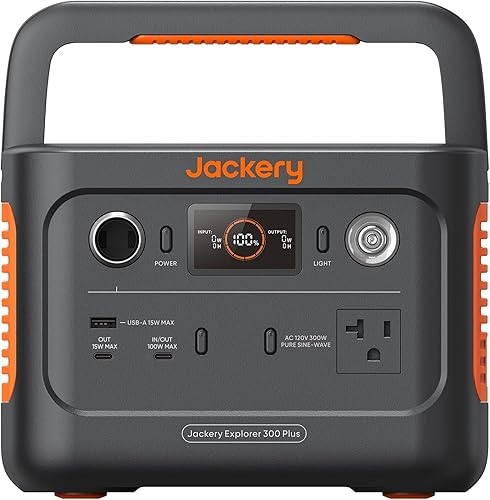
5. Jackery Explorer 300 Plus — Best Ultralight Camping Power Station
Why it’s on this list: Amazon’s best-selling portable power station exists because it does one thing really well: give you enough power for phones, laptops, and lights in a package small enough to forget it’s there.
Check Price on Amazon (see our Jackery Explorer 300 Plus review)
Key specs for campers:
- 288Wh capacity — slightly more than the EcoFlow River 3
- 300W output — phones, laptops, LED lights, small fans
- 8.3 lbs — ultraportable
- 25dB noise level — essentially silent
- Available as a kit with a 40W solar panel for complete off-grid charging
Standout features:
- Amazon’s best-seller status means an enormous user base has validated this product. Over 5,000 reviews at 4.6 stars. The community support and accessory ecosystem is strong.
- At 25dB, it’s the quietest station in its class. You won’t hear it running at night, which matters if you’re a light sleeper in a tent.
- The optional SolarSaga 40W panel bundle turns this into a complete grab-and-go solar setup for under $250. For weekend tent camping, that’s all most people need.
What could be better:
- 300W output severely limits what you can plug in. No mini fridge, no blender, no electric anything beyond chargers and lights. The EcoFlow River 3 doubles this output for $30 less.
- 2-hour charge time is slow compared to the River 3’s 57 minutes. Plan ahead.
Who should buy this: First-time campers testing the waters on portable power. Festival-goers. Anyone who wants to buy a proven, widely-loved product with minimal risk. Also makes a great gift for the camper in your life.
Verdict: Not the most capable station on this list, but potentially the most widely beloved. If you want a safe, proven choice for light camping power needs, 5,000 Amazon reviewers can’t all be wrong.
How We Evaluated These Power Stations
We focused on what actually matters at a campsite: carry weight (because you have to get it there), capacity per pound (efficiency), charging speed (because you’ll forget to charge it the night before), solar compatibility (for off-grid freedom), and output wattage (what can you actually run). We weighted portability and charging speed more heavily than raw output since most campers don’t run heavy appliances.
Every station on this list uses LiFePO4 batteries, which last 3,000-4,000 charge cycles and handle temperature extremes better than older lithium-ion chemistry. We specifically excluded stations with lithium-ion batteries because LiFePO4 is strictly better for the use case of repeated camping trips over years.
Frequently Asked Questions
How many watt-hours do I need for a weekend camping trip?
For phone charging, LED lights, and a small fan, 250-300Wh covers a typical 2-night trip. If you’re running a 12V mini fridge (draws about 30-50W continuously), plan on 500-1000Wh depending on ambient temperature and how often the compressor cycles. Our general rule: estimate your daily power consumption in watt-hours, multiply by the number of days, and add 20% as a buffer. For a detailed walkthrough, see our guide on what size portable power station do I need.
Can I charge a portable power station with my car while driving?
Yes, all five stations on this list accept 12V car charger input. Expect charging speeds of 100-200W from a standard car outlet, which means a full charge takes 5-10 hours for a 1000Wh unit. Some stations offer faster car charging through the Anderson connector or DC input. Plan long drives around charging if solar isn’t an option.
Will a portable power station run a CPAP machine all night?
A typical CPAP draws 30-60W depending on pressure settings and whether the humidifier is on. A 1000Wh station runs a CPAP for 15-30+ hours — easily multiple nights without recharging. Even the 245Wh EcoFlow River 3 handles one night with a CPAP. This is one of the most common use cases we hear about from camping readers, and it works well.
How long does it take to charge a power station with solar panels?
It depends on panel wattage and sun conditions. With a 200W panel in direct sun, expect roughly 200Wh per hour in ideal conditions (realistically 150Wh accounting for angles and clouds). So a 1000Wh station takes about 5-7 hours of good sunlight with a single 200W panel. Two panels cut that roughly in half. Morning and evening output drops significantly — peak charging happens between 10am and 2pm.
Are portable power stations safe to use inside a tent?
Yes, completely safe. Unlike gas generators, portable power stations produce zero emissions — no carbon monoxide, no exhaust, no fumes. They’re designed for indoor use. The only consideration is ventilation: during heavy loads, the cooling fans spin up and generate some warm air. Keep the vents unobstructed and you’re fine. This is one of their biggest advantages over traditional generators for camping.