Best Enclosed 3D Printer (2026) — Compared & Ranked
An enclosure is not a luxury feature — it is a functional requirement for printing ABS, ASA, nylon, polycarbonate, and other engineering-grade materials that warp, crack, or delaminate in open air. Beyond material compatibility, enclosures reduce noise, contain fumes, maintain stable temperatures, and protect prints from drafts that cause quality issues. In 2026, enclosed printers range from budget-friendly options to fully heated chambers for the most demanding materials.
The top pick is the Bambu Lab P1S — Check Price on Amazon. It pairs Bambu Lab’s best-in-class software ecosystem and CoreXY speed with a proper enclosure at $699 — the price point where performance, polish, and material capability converge. But the best enclosed printer for you depends on what materials you need and whether passive or active heating matters — so here are five picks covering the full range.
Quick Comparison
| Enclosed 3D Printer | Price | Build Volume | Speed | Chamber | Best For |
|---|---|---|---|---|---|
| Bambu Lab P1S | $699 | 256x256x256mm | 500mm/s | Passive | Best Overall |
| QIDI X-Plus 3 | $599 | 280x280x270mm | 600mm/s | Active Heated | Best Heated Chamber |
| Bambu Lab X1 Carbon | $1,449 | 256x256x256mm | 500mm/s | Passive | Best Premium |
| Creality K1C | $399 | 220x220x250mm | 600mm/s | Passive | Best for Carbon Fiber |
| Flashforge Adventurer 5M Pro | $449 | 220x220x220mm | 600mm/s | Passive + HEPA | Best with HEPA |
1. Bambu Lab P1S — Best Overall Enclosed 3D Printer
Why it’s the #1 pick: The Bambu Lab P1S delivers the complete Bambu Lab experience — fast CoreXY printing, automatic calibration, and the most polished slicer and app ecosystem in consumer 3D printing — inside an enclosure that makes ABS and ASA printing effortless. At $699, it hits the sweet spot where you get premium software and hardware without paying for features most users do not need.
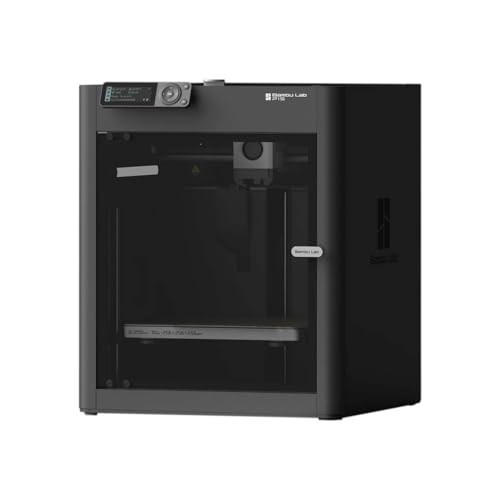
Key specs:
- CoreXY motion system — 256x256x256mm build volume
- 500mm/s advertised speed
- Fully enclosed with polycarbonate panels
- Automatic bed leveling, vibration compensation, and flow calibration
- Compatible with PLA, PETG, ABS, ASA, TPU, PA (nylon with drybox)
- AMS compatible (sold separately) for multi-color printing
Standout features:
- Bambu Studio and the Bambu Handy app represent the smoothest software experience in 3D printing. Based on owner data, the P1S prints reliably from the first print with minimal calibration — a stark contrast to the tuning hours required by Klipper-based competitors.
- The enclosure passively retains enough heat for reliable ABS and ASA printing. Owner reviews consistently report successful ABS prints without warping, which is the primary reason most users want an enclosed machine.
- The AMS (Automatic Material System) enables multi-color and multi-material printing when purchased separately. For users who add the AMS later, the P1S becomes significantly more versatile without buying a new printer.
What could be better:
- The enclosure is passively heated — the chamber temperature depends on bed and nozzle heat only. For high-temperature materials like polycarbonate and some nylons, the QIDI X-Plus 3’s actively heated chamber reaches higher temperatures more reliably.
- No built-in camera (unlike the X1 Carbon). Remote monitoring requires the separate AMS unit with camera or a third-party solution.
- 256mm build volume is mid-range. Users who need 300mm+ should look at the QIDI X-Max 3 or Creality K1 Max.
Who should buy this: Anyone who wants a fast, enclosed 3D printer that works well out of the box for PLA, PETG, ABS, and ASA. The P1S is the right choice for hobbyists upgrading from an open-frame printer, users who want multi-material capability via the AMS, and anyone who values software polish.
Verdict: The most complete enclosed 3D printer package at a competitive price. The Bambu Lab ecosystem advantage alone is worth the investment for most users.
2. QIDI X-Plus 3 — Best Enclosed Printer with Heated Chamber
Why it ranks here: The QIDI X-Plus 3 is the most affordable enclosed printer with an actively heated chamber. While passively enclosed machines rely on radiant heat from the bed and hotend, the X-Plus 3 actively pumps heated air into the build chamber, reaching temperatures that enable nylon, polycarbonate, and glass-fiber composites without the warping and delamination that plague passively heated enclosures.
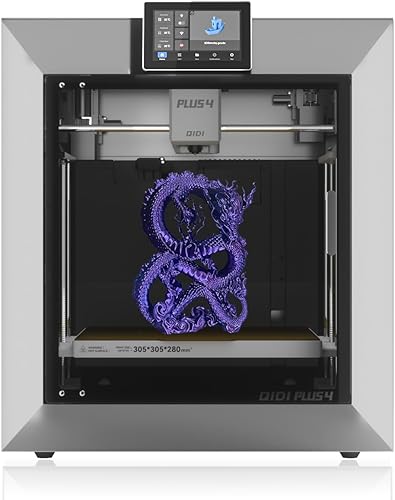
Key specs:
- CoreXY motion system
- 280x280x270mm build volume
- 600mm/s advertised speed
- Fully enclosed with actively heated chamber
- Compatible with PLA, PETG, ABS, ASA, PA, PC, CF composites
- Klipper firmware
Standout features:
- The actively heated chamber is the defining feature. Based on owner data, the X-Plus 3 maintains chamber temperatures significantly higher than passively enclosed competitors, which translates directly to reliable printing with nylon, polycarbonate, and carbon-fiber-filled materials that warp or crack in lower ambient temperatures.
- 280x280x270mm is a notably larger build volume than the Bambu Lab P1S (256mm cube), providing meaningful extra space for mid-sized engineering parts and prototypes.
- At $599, this undercuts the Bambu Lab P1S by $100 while offering a larger build volume and heated chamber. For users whose primary concern is material versatility, this is the better value.
What could be better:
- The QIDI software ecosystem is functional but lacks the polish of Bambu Studio. Owner reviews note that slicer profiles require more manual tuning for optimal results with different materials.
- No multi-material system comparable to Bambu’s AMS. Multi-color printing requires manual filament changes.
- Community support and documentation are smaller than Bambu Lab’s or Creality’s user bases.
Who should buy this: Engineers, product designers, and functional-print enthusiasts who need to print nylon, polycarbonate, and carbon-fiber composites reliably. If your material requirements extend beyond ABS/ASA into true engineering thermoplastics, the heated chamber is essential, and the X-Plus 3 is the most accessible way to get one.
Verdict: The best heated-chamber printer under $600. For high-performance material printing, nothing else at this price comes close.
3. Bambu Lab X1 Carbon — Best Premium Enclosed 3D Printer
Why it ranks here: The Bambu Lab X1 Carbon is the fully loaded version of the Bambu Lab platform. It adds an AI-powered camera for failure detection, a hardened steel nozzle for abrasive materials, an integrated AMS unit for multi-color printing, and a host of sensors that make it the most automated and monitored enclosed printer available.
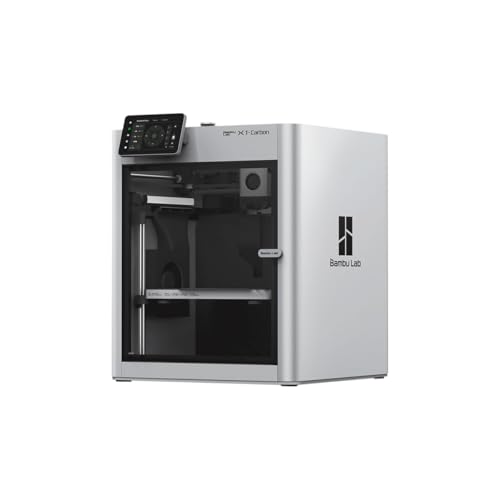
Key specs:
- CoreXY motion system — 256x256x256mm build volume
- 500mm/s advertised speed
- Fully enclosed
- AI-powered camera for spaghetti detection and timelapse
- Hardened steel nozzle (standard) for carbon-fiber and glass-fiber filaments
- AMS included for 4-color printing out of the box
- Full suite of sensors: flow rate, vibration, filament runout
Standout features:
- The AI camera detects print failures (spaghetti, layer shifts, adhesion failures) and can pause or stop the print automatically. Based on owner data, this saves significant material waste on long prints — particularly valuable for overnight or unattended runs.
- The hardened steel nozzle handles carbon-fiber-reinforced filaments, glass-fiber composites, and glow-in-the-dark materials without the wear that destroys standard brass nozzles. Owner reviews from users printing CF-PLA and CF-PETG report the nozzle showing no measurable wear after hundreds of hours.
- The included AMS provides 4-color printing out of the box. Combined with Bambu Studio’s automatic color-change support and the growing library of multi-color models, this creates a complete multi-material printing system.
What could be better:
- At $1,449, it is more than double the price of the P1S ($699). The core print quality is similar — the premium pays for the camera, sensors, AMS, and hardened nozzle. Users who do not need these features should buy the P1S instead.
- Like the P1S, the enclosure is passively heated. The QIDI X-Plus 3’s active chamber heating reaches higher temperatures for less money.
- 256mm build volume is the same as the P1S. Users needing larger build space should look elsewhere regardless of budget.
Who should buy this: Power users who print daily, use abrasive filaments, want multi-color capability, and value the peace of mind of AI failure detection. Small businesses and content creators who need reliable, unattended printing will benefit most from the premium features.
Verdict: The best enclosed printer money can buy if you need every feature. The question is whether those features justify spending $750 more than the P1S — for daily printers and professional use, the answer is yes.
4. Creality K1C — Best Enclosed Printer for Carbon Fiber Filaments
Why it ranks here: The K1C is purpose-built for carbon-fiber and other abrasive filaments. At $399 — the lowest price point in this roundup — it includes a hardened nozzle, an enclosed chamber, and 600mm/s speed. For users specifically looking to print CF-PLA, CF-PETG, and similar reinforced materials on a budget, the K1C hits the target precisely.
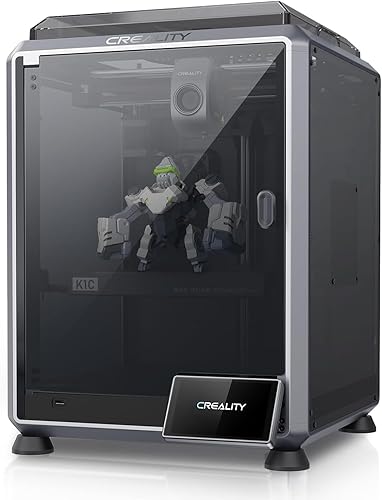
Key specs:
- CoreXY motion system
- 220x220x250mm build volume
- 600mm/s advertised speed
- Fully enclosed
- Hardened nozzle for carbon fiber and glass fiber filaments
- Quick-swap nozzle system
Standout features:
- The hardened nozzle and enclosed design at $399 make the K1C the most affordable way to print carbon-fiber filaments in a controlled environment. Based on owner data, CF-PLA and CF-PETG prints come out with consistent quality and minimal warping.
- 600mm/s speed is 100mm/s faster than the Bambu Lab P1S (advertised), and the K1C costs $300 less. For users who prioritize raw speed in an enclosed machine, this is a compelling value.
- The quick-swap nozzle system allows switching between hardened and standard nozzles in seconds. Owner reviews praise this for users who alternate between standard PLA and abrasive CF materials.
What could be better:
- The 220x220x250mm build volume is the smallest in this roundup. Users who need more space will find the P1S or QIDI X-Plus 3 more practical.
- Creality’s software ecosystem (Creality Print, Creality Cloud) is less polished than Bambu Studio. The print community reports a less seamless out-of-box experience.
- The enclosure is passively heated and does not reach temperatures suitable for nylon or polycarbonate without modifications.
Who should buy this: Budget-focused users who specifically need to print carbon-fiber and glass-fiber reinforced filaments in an enclosed machine. At $399, the K1C removes the financial barrier to entering CF printing.
Verdict: The cheapest path to enclosed carbon-fiber printing. If CF filaments are your primary interest and budget matters, the K1C is the clear choice.
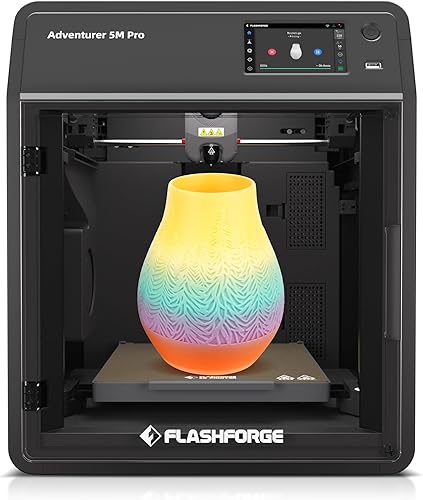
5. Flashforge Adventurer 5M Pro — Best Enclosed Printer with HEPA Filtration
Why it ranks here: The Adventurer 5M Pro is the only printer in this roundup with a built-in HEPA filtration system. For users who print in shared spaces — home offices, classrooms, makerspaces — the ability to filter particulates and fumes without aftermarket modifications is a genuine safety and convenience advantage that no other machine on this list provides.
Key specs:
- CoreXY motion system
- 220x220x220mm build volume
- 600mm/s advertised speed
- Fully enclosed with built-in HEPA and activated carbon filtration
- Quick-change nozzle system
- Compatible with PLA, PETG, ABS, ASA, TPU
Standout features:
- The integrated HEPA and activated carbon filter system captures particulates and absorbs VOC fumes generated during printing. Based on owner data, users in apartments, home offices, and shared workspaces report noticeably less odor compared to standard enclosed printers — particularly when printing ABS.
- The quick-change nozzle system enables swapping between 0.4mm and 0.6mm nozzles (or hardened variants) without tools in under 30 seconds. Owner reviews highlight this as a genuine time-saver for users who switch between detail work and large functional prints.
- 600mm/s speed in a fully filtered enclosure at $449 provides strong value for users who need both speed and air quality.
What could be better:
- The 220mm cube build volume is tied with the K1C for the smallest in this roundup. Users who need more space should look at the P1S or QIDI X-Plus 3.
- HEPA filters require periodic replacement, adding to ongoing costs. Based on owner data, filters last approximately 3-6 months depending on print volume and material types.
- Flashforge’s ecosystem and community are smaller than Bambu Lab’s or Creality’s. Slicer options and community support are more limited.
Who should buy this: Users who print in shared or poorly ventilated spaces and prioritize air quality. Ideal for home offices, classrooms, libraries, and any environment where fume exposure is a concern. Also a strong choice for ABS users who want to minimize odor.
Verdict: The safest enclosed printer for shared environments. The HEPA filtration is a genuine differentiator that no competitor matches at this price point.
How We Evaluated
Every enclosed 3D printer in this roundup was evaluated using manufacturer specifications, published comparisons, and patterns from hundreds of verified owner reviews:
- Enclosure quality: Evaluated on construction material, seal integrity, and thermal retention. Printers with actively heated chambers scored highest for material compatibility.
- Material compatibility: The range of materials each printer reliably handles — from basic PLA to engineering-grade nylon and polycarbonate — was a primary ranking factor.
- Temperature management: Chamber temperature data (passive vs. active heating) was evaluated against material requirements. Higher and more stable chamber temperatures enable a wider range of materials with fewer failures.
- Print quality at speed: Enclosed printers were evaluated on print quality at their advertised speeds. Input shaping, pressure advance, and vibration damping capabilities were all considered.
- Software ecosystem: Slicer quality, app functionality, remote monitoring, and community support all contribute to the daily usability of an enclosed printer.
- Air quality features: Filtration systems (HEPA, activated carbon) and fume management were evaluated for users printing in shared spaces.
Frequently Asked Questions
Do I really need an enclosed 3D printer?
If you only print PLA and PETG, an enclosure is nice to have but not necessary. If you plan to print ABS, ASA, nylon, or polycarbonate, an enclosure is effectively required — these materials warp and crack without a controlled thermal environment. For help choosing between filament types, see our PLA vs ABS vs PETG comparison. An enclosure also reduces noise, contains fumes, and protects prints from ambient temperature changes and drafts.
What is the difference between a passively and actively heated chamber?
A passively heated enclosure retains heat generated by the heated bed and hotend. Chamber temperatures typically reach 40-55C depending on bed temperature and enclosure quality. An actively heated chamber pumps warm air into the build space, reaching 60-80C+ — temperatures required for reliable nylon and polycarbonate printing. For ABS and ASA, passive heating is usually sufficient.
Can I add an enclosure to an open-frame printer?
Yes, and the print community has documented many DIY enclosure solutions. IKEA LACK table enclosures, acrylic box builds, and commercial enclosure kits are all common. However, aftermarket enclosures rarely match the thermal performance of purpose-built enclosed machines, and some printers (particularly those with electronics mounted below the print bed) may overheat in an enclosure without modifications.
Is the Bambu Lab P1S worth $100 more than the QIDI X-Plus 3?
It depends on your priorities. The P1S wins on software polish, ecosystem, and multi-material capability via the AMS. The QIDI X-Plus 3 wins on build volume, chamber heating, and raw material compatibility. If you print mostly PLA, PETG, ABS, and ASA — buy the P1S. If you need nylon, polycarbonate, and high-temperature materials — buy the QIDI X-Plus 3.
How loud are enclosed 3D printers?
Most enclosed printers in this roundup operate at 45-55 dB during printing, roughly equivalent to a quiet conversation or a running dishwasher. The enclosure typically reduces noise by 5-10 dB compared to open-frame equivalents. Based on owner data, the Bambu Lab P1S and Flashforge Adventurer 5M Pro are among the quietest at normal print speeds.