Best Large Format 3D Printer (2026) — Compared & Ranked
Standard 3D printers with 220-256mm build volumes cover most projects, but some work simply demands more space. Full-sized cosplay helmets, furniture components, architectural models, large vases, drone frames, and multi-part assemblies that you would rather print in one piece — these all require a build volume north of 300mm in at least one axis. The large-format segment has matured significantly, and 2026 offers genuine options across a wide price range.
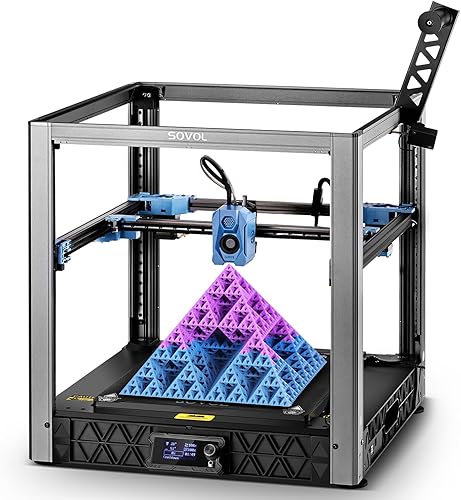
The top pick is the Sovol SV08 — Check Price on Amazon. With a 350x350x345mm build volume, 700mm/s speed, Voron-based CoreXY design, and a price under $500, it delivers the most build space per dollar of any printer on the market. But the best large-format printer for you depends on whether you need an enclosure, heated chamber, or premium build quality — so here are five picks covering different priorities.
Quick Comparison
| Large Format Printer | Price | Build Volume | Speed | Enclosure | Best For |
|---|---|---|---|---|---|
| Sovol SV08 | $499 | 350x350x345mm | 700mm/s | Open | Biggest + Fastest |
| Creality K1 Max | $687 | 300x300x300mm | 600mm/s | Enclosed | Best Enclosed Large |
| Prusa XL | $2,449 | 360x360x360mm | 200mm/s | Optional | Best Quality Large |
| QIDI X-Max 3 | $799 | 325x325x325mm | 600mm/s | Enclosed | Best for Engineering |
| Elegoo Neptune 4 Plus | $350 | 320x320x385mm | 500mm/s | Open | Best Budget Large |
1. Sovol SV08 — Biggest and Fastest Large Format Printer
Why it’s the #1 pick: The Sovol SV08 delivers the largest build volume in its price class, the highest advertised speed of any printer in this roundup, and it does both for under $500. Based on the Voron 2.4 open-source design — one of the most respected CoreXY architectures in the 3D printing community — it offers enthusiast-grade engineering at a consumer price point.
Key specs:
- CoreXY motion system based on Voron 2.4 design
- 350x350x345mm build volume — one of the largest available under $1,000
- 700mm/s advertised speed with Klipper firmware
- Auto bed leveling and input shaping
- Open frame design
Standout features:
- The 350mm cube of build space is transformative. Owner data shows users printing full cosplay helmets, large planters, furniture brackets, and drone frames in single prints that would require splitting on a 220mm or even 300mm machine.
- Klipper firmware with input shaping enables genuinely fast printing without the ringing artifacts that plague high-speed printers. The print community reports that real-world speeds of 300-400mm/s are sustainable with good quality on well-tuned machines, with burst moves reaching the advertised 700mm/s.
- The Voron DNA gives the SV08 an upgrade path that most consumer machines lack. Owners can tap into the extensive Voron mod community for enclosure kits, toolhead upgrades, and firmware customization.
What could be better:
- No enclosure means ABS and ASA printing is impractical without a DIY or aftermarket enclosure. For PLA and PETG, this is not an issue, but it limits material versatility for engineering applications.
- Setup requires more effort than plug-and-play machines like Bambu Lab printers. The print community reports that initial calibration and tuning take 2-4 hours for optimal results.
- Quality control varies. Owner reviews note occasional mechanical issues that require adjustment out of the box.
Who should buy this: Makers and hobbyists who need maximum build volume at minimum cost and are comfortable with some initial tinkering. Ideal for cosplay, large prototypes, home improvement parts, and any project where size is the primary constraint.
Verdict: The most build space for the money, period. If you need to print big and fast on a budget, the SV08 is the obvious choice.
2. Creality K1 Max — Best Enclosed Large Format Printer
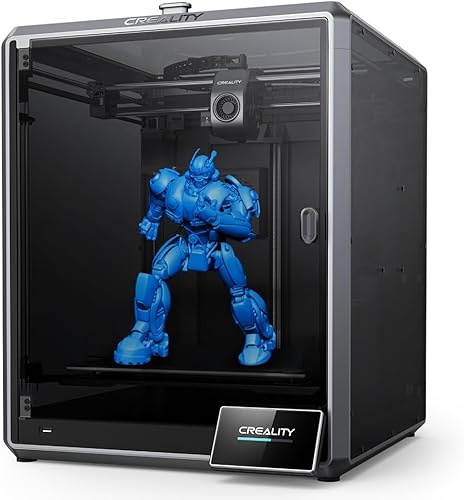
Why it ranks here: The Creality K1 Max packages a 300mm cube build volume inside a fully enclosed chassis at $687. The enclosure enables printing ABS, ASA, and other temperature-sensitive materials without DIY modifications, and the 600mm/s speed keeps print times manageable even on large models.
Key specs:
- CoreXY motion system
- 300x300x300mm build volume
- 600mm/s advertised speed
- Fully enclosed with removable top panel
- AI-powered camera for remote monitoring and failure detection
- Auto bed leveling and input shaping
Standout features:
- The enclosure makes the K1 Max immediately practical for ABS and ASA without any modifications. Based on owner data, the passive heat retention from the enclosure is sufficient for reliable ABS printing, though it does not reach the active chamber temperatures of machines like the QIDI X-Max 3.
- The AI camera provides spaghetti detection and remote monitoring via the Creality Cloud app. For long large-format prints that can run 12-24+ hours, owner reviews highlight this as a genuine quality-of-life feature that saves wasted filament and time.
- 300mm in all three axes is large enough for the vast majority of projects that outgrow standard printers. Helmets, large vases, and structural components all fit comfortably.
What could be better:
- 300mm is 50mm shorter in each axis than the Sovol SV08, and the K1 Max costs $188 more. For PLA-only users who do not need an enclosure, the SV08 offers more space for less money.
- The Creality Cloud ecosystem has improved but still lags behind Bambu Lab’s software polish based on owner feedback. Some users report connectivity issues with the cloud features.
Who should buy this: Users who need a large build volume with the ability to print engineering materials (ABS, ASA) out of the box, without building or buying a separate enclosure. The K1 Max is the simplest path to large, enclosed printing.
Verdict: The most practical enclosed large-format printer at a reasonable price. For users who print in ABS or ASA regularly, the enclosure justifies the premium over open-frame alternatives.
3. Prusa XL — Best Quality Large Format Printer
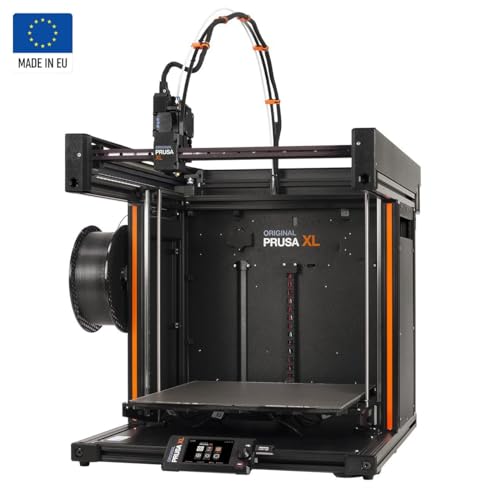
Why it ranks here: The Prusa XL approaches large-format printing from the quality and reliability angle rather than the speed or price angle. With a 360mm cube build volume, optional tool changer for multi-material printing, and Prusa’s legendary firmware and support, it is the large-format printer for users who prioritize consistent output and long-term reliability over raw specifications.
Key specs:
- 360x360x360mm build volume — the largest in this roundup
- 200mm/s print speed (conservative but consistent)
- Optional tool changer with up to 5 toolheads for multi-material printing
- Segmented heated bed (only heats zones in use)
- Optional enclosure available
- PrusaSlicer integration
Standout features:
- The tool changer system is genuinely unique at this price point. Based on owner data, the ability to print with up to 5 different materials in a single print enables multi-color models, soluble support interfaces, and combining rigid and flexible materials — workflows that are impossible on single-toolhead machines.
- The segmented heated bed only warms the zones where the print sits, reducing energy consumption by up to 80% on smaller prints according to Prusa’s specs. For a 360mm bed that runs for long prints, this translates to meaningful electricity savings.
- Prusa’s firmware, documentation, and customer support are consistently rated highest in the industry. Owner reviews report minimal issues with print quality consistency over thousands of hours of printing.
What could be better:
- At $2,449, the Prusa XL costs 3-5 times more than most competitors on this list. The premium buys reliability and the tool changer, not speed.
- 200mm/s is significantly slower than the 500-700mm/s offered by CoreXY competitors. Large prints that take 8 hours on a Sovol SV08 may take 15-20+ hours on the Prusa XL.
Who should buy this: Professional users, small businesses, and serious hobbyists who need reliable large-format output with multi-material capability and are willing to pay a premium for Prusa’s build quality and support ecosystem.
Verdict: The most reliable large-format printer money can buy, but the price and speed will deter casual users. This is a professional tool.
4. QIDI X-Max 3 — Best Large Format for Engineering Materials
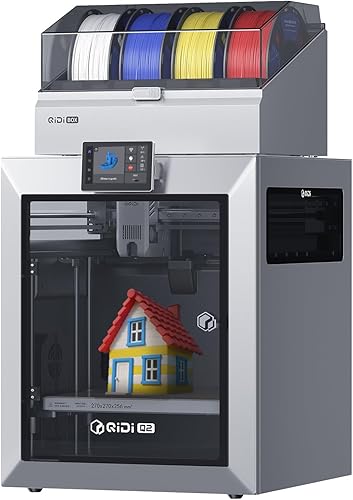
Why it ranks here: The X-Max 3 combines a 325mm cube build volume with an actively heated chamber that reaches temperatures high enough for nylon, polycarbonate, and other engineering-grade materials. For users printing functional parts that need to withstand heat, chemicals, or mechanical stress, the heated chamber is not optional — and the X-Max 3 is the most accessible way to get one at this build size.
Key specs:
- CoreXY motion system
- 325x325x325mm build volume
- 600mm/s advertised speed
- Fully enclosed with actively heated chamber
- Compatible with PLA, PETG, ABS, ASA, nylon, PC, CF composites
- Klipper firmware
Standout features:
- The actively heated chamber is the key differentiator. Based on owner data, the chamber temperatures enable reliable printing of nylon, polycarbonate, and carbon-fiber-reinforced materials at a build size that most heated-chamber machines cannot match at this price.
- 325mm in all axes accommodates large functional parts — automotive brackets, equipment housings, structural components — in materials strong enough for end-use applications.
- Klipper firmware with input shaping delivers strong print quality at high speeds. The print community reports that the X-Max 3 handles engineering materials with less warping and better layer adhesion than passively enclosed competitors.
What could be better:
- At $799, it sits in a competitive price point where the Bambu Lab P1S ($699) offers a more polished software ecosystem, and the Sovol SV08 ($499) offers more build volume.
- The QIDI software and ecosystem are less refined than Bambu Lab’s. Owner reviews note a steeper learning curve for the slicer settings and firmware configuration.
Who should buy this: Engineers, product designers, and functional-print enthusiasts who need to print large parts in nylon, polycarbonate, or carbon-fiber composites. The heated chamber is essential for these materials, and the X-Max 3 delivers it at a competitive price.
Verdict: The best option for large engineering prints. If your projects demand high-performance materials at scale, the heated chamber makes the X-Max 3 the clear choice.
5. Elegoo Neptune 4 Plus — Best Budget Large Format Printer
Why it ranks here: At $350, the Neptune 4 Plus delivers a 320x320x385mm build volume — larger than the $687 Creality K1 Max — at roughly half the price. It sacrifices the enclosure and some refinement, but for PLA and PETG projects where build size and budget are the priorities, nothing else comes close to this value proposition.
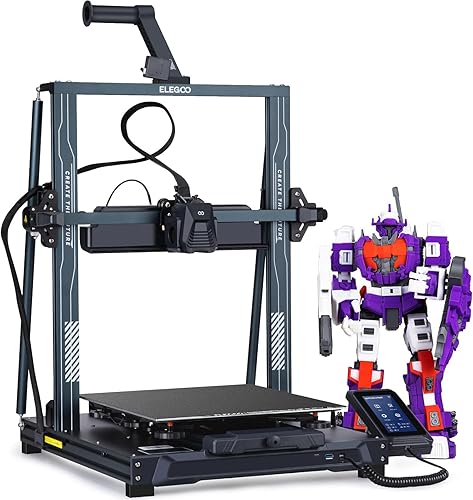
Key specs:
- 320x320x385mm build volume — the tallest Z-height in this FDM roundup
- 500mm/s advertised speed
- Open frame design
- Klipper firmware with input shaping
- Auto bed leveling
- Direct drive extruder
Standout features:
- The 385mm Z-height is notable. Based on owner data, this accommodates tall prints — large vases, sword replicas, full-height figurines — that even the Sovol SV08’s 345mm Z-axis cannot handle without splitting.
- At $350, this is the cheapest printer in the roundup by $149 and yet offers more build volume than the $687 K1 Max. For budget-conscious makers who print primarily in PLA, the value math is difficult to argue with.
- Klipper firmware provides the same advanced features (input shaping, pressure advance) found in printers costing two to three times as much.
What could be better:
- The open frame means no material versatility beyond PLA and PETG without a DIY enclosure.
- Build quality and fit-and-finish are below the Sovol SV08 and significantly below the Creality K1 Max. Owner reviews report that some units require more initial calibration and ongoing adjustment.
- Elegoo’s 3D printer ecosystem is less mature than Creality’s or Bambu Lab’s. Community support and documentation are growing but not yet at the same level.
Who should buy this: Budget-focused makers who need the largest possible print area for the lowest price and are comfortable with PLA and PETG. Particularly strong for cosplay, large decorative prints, and home improvement projects.
Verdict: The most build volume per dollar available. If your budget is under $400 and you need to print big, the Neptune 4 Plus is the rational choice.
How We Evaluated
Every large-format 3D printer in this roundup was evaluated using manufacturer specifications, published print comparisons, and patterns from hundreds of verified owner reviews:
- Build volume: The primary metric for this category. Total usable print space in all three axes was measured and compared. Z-height matters as much as XY footprint for certain applications.
- Print speed: Advertised speeds were noted, but real-world owner-reported speeds at acceptable quality levels were weighted more heavily. Input shaping and firmware maturity affect practical speed more than raw motor capability.
- Enclosure and material compatibility: Enclosed machines scored higher for material versatility. Actively heated chambers scored highest for enabling engineering-grade materials.
- Print quality at scale: Large prints amplify small quality issues — ringing, layer inconsistency, and warping become more visible. Owner-reported quality on large prints (10+ hour runs) was evaluated specifically.
- Price-to-volume ratio: Calculated as build volume per dollar. The Sovol SV08 and Elegoo Neptune 4 Plus lead this metric by a significant margin.
- Reliability and support: Long prints on large machines represent significant time and material investment. Printers with better reliability data and stronger support ecosystems scored higher.
Frequently Asked Questions
How big of a 3D printer do I actually need?
For most hobbyists, a 220-256mm build volume handles 90% of projects. Large-format printers (300mm+) are worth the investment if you regularly print cosplay parts, architectural models, furniture components, or any project that requires splitting on a standard machine. Based on owner data, the most common reason for upgrading to large format is frustration with gluing split parts together.
Does a larger build volume mean worse print quality?
Not inherently, but larger prints amplify any quality issues. A printer with slight ringing artifacts may be unnoticeable on a 50mm part but very visible on a 300mm print. The print community recommends that large-format users invest extra time in calibration — input shaping, flow rate tuning, and vibration damping — to maintain quality at scale.
How long do large prints take?
A 300mm-tall print at 0.2mm layer height requires 1,500 layers minimum. At moderate speeds with proper quality settings, expect 15-30+ hours for very large single-piece prints. High-speed machines like the Sovol SV08 and Creality K1 Max reduce this significantly, but prints filling the entire build volume will still run overnight or longer.
Do I need an enclosure for large-format printing?
For PLA and PETG — no. Both materials print reliably in open environments. For ABS, ASA, nylon, and polycarbonate — yes, absolutely. These materials warp and crack in open air, and the larger the print, the worse the warping becomes. If you plan to use engineering materials, choose an enclosed machine like the K1 Max, QIDI X-Max 3, or add a DIY enclosure to the Sovol SV08.
Is the Prusa XL worth $2,449?
For professional users and small businesses that need consistent output, the tool changer, and Prusa’s support ecosystem — yes. For hobbyists who primarily print in PLA and PETG and want maximum build volume per dollar — no. The Sovol SV08 at $499 offers comparable build volume and faster speeds. The Prusa XL justifies its price through reliability, multi-material capability, and long-term support, not through raw specifications.