Best 3D Printer for Miniatures (2026) — Compared & Ranked
Miniature printing is one of the most demanding applications in consumer 3D printing. A 28mm tabletop figure has facial features measured in fractions of a millimeter, weapon details that disappear if the printer cannot resolve them, and surfaces that need to accept paint without visible layer lines. This is the one category where resin printers genuinely outperform FDM machines — but FDM has closed the gap enough to earn a place on this list for specific use cases.
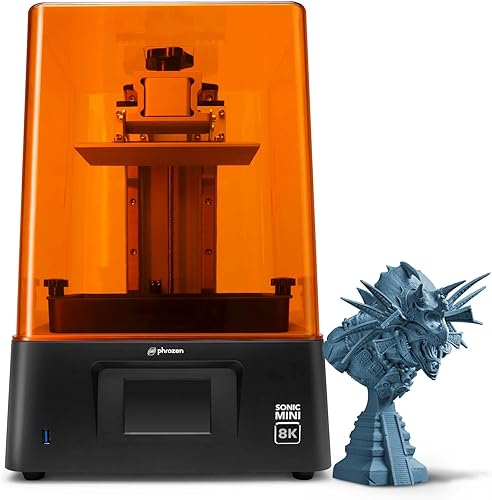
The top pick is the Phrozen Sonic Mini 8K — Check Price on Amazon. Its ultra-tight pixel density resolves details that other printers cannot reproduce at miniature scale. But the best printer for your miniatures depends on how many you print, what scale you work in, and whether you want to deal with resin post-processing — so here are five picks covering every approach.
Quick Comparison
| 3D Printer | Price | Type | Build Volume | Detail | Speed | Best For |
|---|---|---|---|---|---|---|
| Phrozen Sonic Mini 8K | $399 | MSLA Resin | 165x72x180mm | 22um pixel | Moderate | Best Detail |
| Elegoo Saturn 3 Ultra | $349 | MSLA Resin | 219x123x260mm | 19x24um pixel | Moderate | Best Large Resin |
| Elegoo Mars 4 Ultra | $249 | MSLA Resin | 153x78x165mm | 9K | Moderate | Best Budget Resin |
| Bambu Lab A1 Mini | $239 | FDM | 180x180x180mm | ~100um | 500mm/s | Best FDM for Minis |
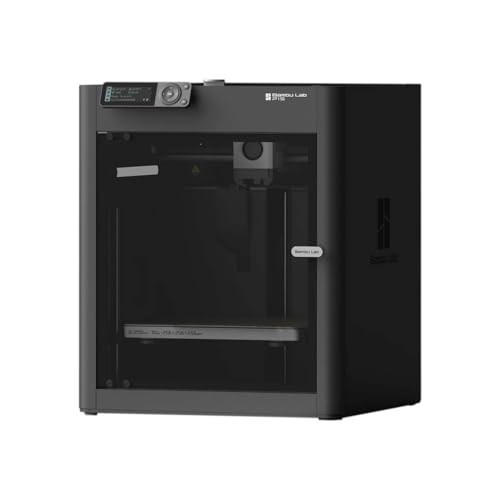
| Bambu Lab P1S | $699 | FDM | 256x256x256mm | ~100um | 500mm/s | Best Enclosed FDM |
1. Phrozen Sonic Mini 8K — Best Detail for Miniatures
Why it’s the #1 pick: When you are printing a 28mm figure, every micron of resolution matters. The Sonic Mini 8K packs its 8K resolution into a compact 7.1” screen, producing the tightest pixel pitch available in any consumer resin printer. The result is miniatures with facial expressions, fabric textures, and weapon engravings that are visibly sharper than what larger-screen printers can achieve at this scale.
Key specs:
- 8K resolution on a 7.1” screen — 22 micron pixel pitch
- 165x72x180mm build volume
- ParaLED 3.0 optical engine for uniform light distribution
- Mono LCD for fast layer exposure times
Standout features:
- The 22-micron pixel size captures detail that other printers smooth over or lose entirely. The print community reports that the Sonic Mini 8K resolves individual chain links, scroll text, and fabric weave patterns on 28mm figures — features that appear as vague blobs on printers with larger pixel sizes.
- Uniform light output from the ParaLED system means consistent detail across the entire build plate. Based on owner data, miniatures printed at the edge of the plate are indistinguishable from those printed in the center.
- The compact screen size means fewer miniatures per batch, but each one is as sharp as the technology allows. For painters preparing competition pieces or display models, this tradeoff is worthwhile.
What could be better:
- The 165x72mm build plate limits batch printing. A typical run fits 4-8 standard 28mm miniatures, compared to 12-20 on the Saturn 3 Ultra.
- At $399, it costs more than the Elegoo Saturn 3 Ultra ($349), which offers a larger build plate and higher raw resolution count.
Who should buy this: Competition miniature painters, display model builders, and anyone who needs the absolute sharpest detail possible on individual figures and is willing to sacrifice batch size for per-miniature quality.
Verdict: The sharpest miniature printer available. If detail quality is your single highest priority, the Sonic Mini 8K is the reference standard.
2. Elegoo Saturn 3 Ultra — Best Resin Printer for Batch Miniature Printing
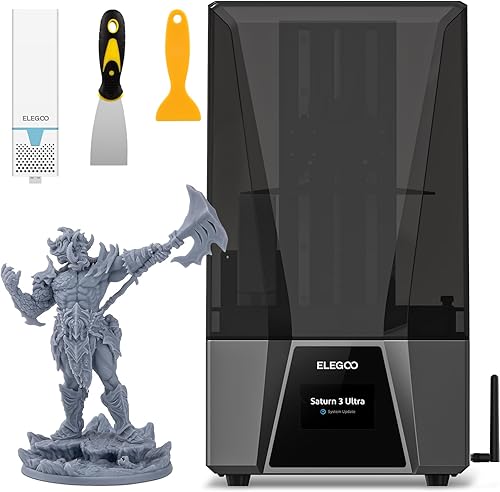
Why it ranks here: Most miniature hobbyists are not printing one figure at a time — they are printing squads, warbands, and entire armies. The Elegoo Saturn 3 Ultra’s 219x123mm build plate fits significantly more miniatures per print session than any Mini-class machine, and its 12K resolution delivers detail quality that is exceptional at this build area.
Key specs:
- 12K mono LCD — 19x24 micron pixel size
- 219x123x260mm build volume — fits 12-20 standard miniatures per batch
- Fresnel collimating light source
- Laser-cut build plate for reliable adhesion
Standout features:
- The batch printing advantage is the primary reason to choose the Saturn 3 Ultra over smaller machines. Owner data shows that tabletop gamers printing armies save dozens of hours by filling the build plate with 15+ figures per run instead of 4-6.
- 12K resolution on this screen size produces a pixel pitch (19x24 microns) that is competitive with — and in some measurements tighter than — the Phrozen Sonic Mini 8K. At normal miniature viewing distance (arm’s length), the print community reports no visible difference in detail quality between the two machines.
- The 260mm Z-height accommodates larger-scale miniatures (54mm, 75mm, and bust-scale) without splitting models.
What could be better:
- The larger vat uses more resin per fill, and large batch prints that fail mid-run waste more material.
- More resin surface area means more peel force per layer, which requires more careful support placement on delicate miniatures.
Who should buy this: Tabletop gamers printing armies, Dungeons & Dragons players who need a steady stream of monsters and terrain, and anyone who values batch throughput alongside excellent detail. This is the most practical resin printer for the miniature hobby.
Verdict: The best balance of detail quality and production volume for miniature printing. Most tabletop hobbyists should start here.
3. Elegoo Mars 4 Ultra — Best Budget Printer for Miniatures
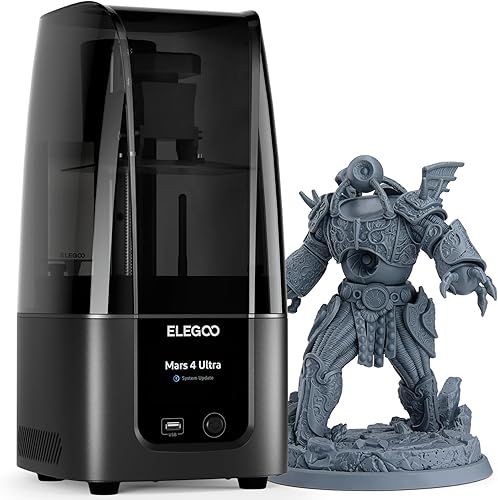
Why it ranks here: At $249, the Mars 4 Ultra is the most affordable path to high-resolution miniature printing. Its 9K resolution produces miniatures that are paintable and display-worthy straight off the build plate, and the compact form factor fits on any desk or shelf.
Key specs:
- 9K mono LCD for fine detail reproduction
- 153x78x165mm build volume
- Tilt-release vat design reduces peel stress on delicate prints
- Compact footprint for small workspaces
Standout features:
- The print community reports that at standard tabletop gaming distance, miniatures from the Mars 4 Ultra are visually indistinguishable from those printed on $400+ machines. The 9K resolution resolves facial features, armor plates, and weapon details clearly at 28mm scale.
- The tilt-release vat mechanism is a genuine advantage for miniatures. Delicate features like thin swords, antennae, and outstretched fingers are less likely to snap during the peel step compared to straight-pull designs.
- Low resin consumption keeps per-miniature costs minimal. Based on owner data, a 500ml bottle of standard resin yields approximately 40-60 standard 28mm miniatures.
What could be better:
- The 153x78mm build plate only fits 4-6 standard miniatures per run. Army builders will feel the bottleneck.
- The 165mm Z-height limits larger-scale prints. 75mm display miniatures may need to be oriented carefully or split.
Who should buy this: First-time miniature printers, casual tabletop gamers who print a few figures at a time, and anyone who wants excellent miniature quality without a large upfront investment.
Verdict: The best value in miniature printing. Spend $249, learn the resin workflow, and produce figures that compete with machines costing twice as much.
4. Bambu Lab A1 Mini — Best FDM Printer for Miniatures
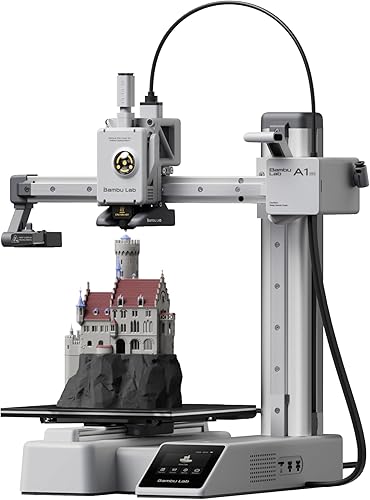
Why it ranks here: Not everyone wants to deal with resin. The Bambu Lab A1 Mini is the best FDM option for miniature printing — not because it matches resin detail (it does not), but because it prints at 500mm/s, produces surprisingly clean results at 0.08mm layer height with a 0.2mm nozzle, and requires zero post-processing chemicals. For terrain, larger-scale figures, and functional game pieces, it is more than adequate.
Key specs:
- 180x180x180mm build volume
- 500mm/s print speed
- Compatible with 0.2mm nozzle for finer detail (sold separately)
- AMS Lite compatible for multi-color miniatures
- Open frame — no enclosure needed for PLA
Standout features:
- The A1 Mini with a 0.2mm nozzle at 0.08mm layer height produces FDM miniatures that, once primed and painted, look genuinely good at arm’s length. The print community has documented impressive results with proper slicer tuning, particularly for terrain tiles and larger-scale (54mm+) figures.
- Multi-color printing via the AMS Lite enables printing miniatures with color separation — painted bases, colored insignia, or multi-material designs — without manual painting. Owner data shows growing adoption of this workflow for game pieces.
- At $239, it costs less than any resin printer on this list, and ongoing material costs are lower (PLA filament vs. resin). There is no washing, curing, or chemical handling required.
What could be better:
- FDM cannot match resin detail at 28mm scale. Fine facial features, thin weapons, and small text will show visible layer lines even at the finest settings.
- The open frame means no temperature control, which limits material options to PLA and PETG for practical purposes. ABS and other engineering materials need an enclosure.
Who should buy this: Tabletop gamers who want terrain, larger-scale figures, and game tokens without the mess and safety concerns of resin printing. Also ideal as a secondary printer alongside a resin machine for printing terrain while the resin printer handles character figures.
Verdict: The best FDM printer for miniature-adjacent work. It will not replace a resin printer for competition-grade figures, but for terrain, tokens, and larger models, it is fast, clean, and affordable.
5. Bambu Lab P1S — Best Enclosed FDM for Miniatures
Why it ranks here: The Bambu Lab P1S adds an enclosure to Bambu Lab’s CoreXY platform, enabling printing with ABS, ASA, and other materials that produce stronger, more durable miniatures than PLA. For gaming pieces that get handled constantly, dropped, and transported in bags, material toughness matters — and an enclosed FDM printer opens those material options.
Key specs:
- CoreXY motion system — 256x256x256mm build volume
- 500mm/s print speed
- Enclosed chamber for stable temperatures
- Compatible with PLA, PETG, ABS, ASA, TPU, and more
- AMS compatible for multi-color and multi-material printing
Standout features:
- The enclosure enables ABS and ASA printing, which produce miniatures that are significantly more impact-resistant than PLA. Based on owner data, game groups that transport figures weekly report far fewer breakages with ABS miniatures.
- The 256mm build volume accommodates large terrain builds, vehicle models, and full diorama pieces that smaller printers cannot handle in one piece.
- Multi-material printing via the AMS allows combining rigid and flexible materials — useful for figures with capes, banners, or other elements that benefit from TPU flexibility.
What could be better:
- At $699, the P1S is the most expensive option on this list. For miniature-only use, the resin printers deliver better detail at lower prices.
- FDM detail at miniature scale still cannot match resin. This is a versatile workhorse, not a detail-focused miniature machine.
Who should buy this: Hobbyists who want one printer for miniatures, terrain, and functional prints. The P1S handles everything from tabletop terrain tiles to replacement parts and household items, making it the most versatile option on this list.
Verdict: The Swiss Army knife approach to miniature printing. If you want one printer that does everything reasonably well rather than one thing perfectly, the P1S is the right choice.
How We Evaluated
Every printer in this roundup was evaluated specifically for miniature printing performance, using manufacturer specifications, published comparison prints, and patterns from verified owner reviews in the tabletop gaming and miniature painting communities:
- Detail resolution: The primary metric for miniature printing. Resin printers were evaluated on pixel density (microns per pixel), and FDM printers on minimum practical layer height and nozzle size. Owner-reported detail quality at 28mm scale was weighted heavily.
- Surface finish: Evaluated based on community print comparisons and owner photos. Miniatures that require minimal post-processing before painting scored higher.
- Batch capacity: Build plate area determines how many miniatures can be printed per session. For army builders, this is a critical factor that affects total production time.
- Material durability: For game pieces that get handled regularly, material strength matters. FDM printers with enclosures scored higher for enabling tougher materials like ABS.
- Total cost of ownership: Printer price, material costs per miniature, and required accessories (wash/cure stations for resin, nozzle kits for FDM) were all factored in.
- Ease of use: Print preparation complexity, post-processing requirements, and failure rates reported by owners all influenced rankings.
Frequently Asked Questions
Should I get a resin or FDM printer for miniatures?
Resin, in almost every case. For a broader comparison of the two technologies, see our FDM vs resin 3D printer guide. For 28mm tabletop miniatures with fine detail, resin printers produce results that FDM cannot match. The surface finish is smooth enough to paint directly without sanding, and sub-50-micron features like facial expressions and inscriptions are clearly resolved. FDM is only preferable if you specifically want to avoid resin chemicals, need to print large terrain, or want a multi-purpose printer.
What layer height should I use for miniatures?
For resin printers: 0.03-0.05mm (30-50 microns) is the standard for miniatures. Going below 0.03mm adds significant print time with diminishing visual returns. For FDM printers: 0.08-0.12mm with a 0.2mm nozzle produces the best results, though detail will still be visibly coarser than resin.
How much does it cost to print a single miniature?
On a resin printer, a standard 28mm miniature uses roughly 5-10ml of resin, costing approximately $0.15-$0.40 in material. On an FDM printer, the same miniature uses roughly 5-10g of filament, costing approximately $0.10-$0.25. The ongoing costs are low for both technologies — the printer itself is the main expense.
Do I need a wash and cure station for resin miniatures?
Technically, you can wash prints in a jar of isopropyl alcohol and cure them in sunlight. Practically, a dedicated wash-and-cure station (like the Elegoo Mercury series) produces more consistent results and simplifies the workflow dramatically. The print community strongly recommends investing in one — expect to spend $60-$120 for a unit that fits miniature-sized prints.
Can I print commercial miniature STL files?
Yes. The tabletop gaming community has a thriving ecosystem of STL designers on platforms like MyMiniFactory, Patreon, and Loot Studios. Monthly subscription services provide dozens of high-quality miniature files for $10-$15/month. Many designers optimize their models specifically for home resin printing with pre-supported files that are ready to print out of the box.